Tuesday, June 12, 2018

Operation Wire Wire: The South Florida Cases, Part 1

Yesterday we started a series of posts about Operation Wire Wire, where the Department of Justice announced charges against 74 people for Business Email Compromise and related scams.

The South Florida cases are so huge, we're actually going to break them into three parts as well.  In part one, we'll look at the case against Cynthia Rodriguez, Destiny Asjee Rowland, and Lourdes Washington.


Defendant #1: Cynthia Rodriguez:
18:1349.F Conspiracy to Commit Wire Fraud
18:1956-3300.F Conspiracy to Commit Money Laundering
18:1956-3300.F Money Laundering and Forfeiture Count

Defendant #2: Destiny Asjee Rowland
18:1343 Wire Fraud
18:1349 Conspiracy to Commit Wire Fraud
18:1956(h) Conspiracy to Commit Money Laundering
18:1956 Money Laundering
18:1956(a)(1)(B)(i) Money Laundering

Defendant #3: Lourdes Washington
18:1349 Conspiracy to Commit Wire Fraud
18:1956(h) Conspiracy to Commit Money Laundering
18:1956(a)(1)(B)(i) Money Laundering

According to the indictment against Destiny Asjee Rowland, Rowland incorporated "Asjee Luxury Inc" in July 2017 and claimed to be a furniture merchant wholesaler at 3688 NW 83rd Lane in Sunrise, Florida.  The victim companies in her case were a company in Eau Claire, Wisconsin, a lumber company in Illinois, and an escrow company in Roseville, California that was selling property for two people called "KW" and "TW" in the indictment.

Asjee Luxury opened accounts at TD Bank and SunTrust Bank.  Using other people's names and email addresses, she convinced companies to transfer money to her account, including by falsely claiming to be the lumber company, where she sent "urgent audit" notices to the Wisconsin company demanding immediate wire transfers of payments owed to the lumber company.  That email came from an IP address in Nigeria on July 27, 2017.  By July 28th, a Bank of America account in Wisconsin had sent $1,651,699 to her TD Bank account in Florida.

 She also caused the escrow company to redirect payments intended for their clients KW and TW to accounts she controlled, receiving $451,759 from a City National Bank account in California into her SunTrust Bank account in Florida on July 31, 2017.

Cynthia Rodriguez and Loudes Washington have a ten page criminal complaint written by a US Secret Service agent to describe their case.  Washington created a new business, LW Nationwide Inc, at 9561 Fountainebleau Blvd, Apartment 402, Miami, Florida 33172, which coincidentally is also his driver's license address.  Then he opened a Bank of America account in that name.

A Real Estate attorney, BD, was handling the closing on several pieces of property.  On Feb 14, 2017, he receives an email from ***@themarstongroup.com informing him that he would receive a check for $37,225 via registered mail, along with a 1099 tax form.  The next day, an email from the same name ***@gmx.us said that he was leaving town unexpectedly and needed the funds sent via wire transfer instead.  Those funds were then directed to the BofA account of LW Nationwide.  Those funds were immediately RE-wired to a bank account in Zhejiang, China.  The same day, Washington withdrew funds from an ATM in Hialeah, Florida.  Three minutes later, at the same ATM machine, Cynthia Rodriguez withdrew funds from the LW Nationwide account, using the same debit card as Washington.   Bank of America's logs reveal that an IP address, 50.143.68.4 was used to access the account.  That IP address was Rodriguez's home Comcast Cable account at 2914 Funston Street, in Hollywood, Florida.  Rodriguez made additional withdrawals from the account, including from a drivethrough ATM whose cameras captured the license plate of her Nissan Quest, 520-TML, registered to Rodriguez.

Washington was later arrested (December 2017) as a result of an open warrant in Kentucky, and testified to opening the accounts, making the wire transfers, and doing the cash withdrawals "at the behest of her recruiter/manager" who she did not identify.

Meanwhile, the Eu Claire, Wisconsin business contacted the US Secret Service about the scam involving the fake invoices from the lumber company.   Records from the state of Florida revealed that Asjee Luxury only had one officer, and one signatory on their bank accounts. What seems to be a cooperating witness (Individual 1) in that case revealed that Rodriguez had recruited them to open several sham business accounts, including the TD Bank account belonging to Asjee Luxury!  Shortly after the California real estate company wired money into that account, ATM video footage showed Individual 1 withdrawing $8,000 cash from the account.  Individual 1 would then give half of the money to Rodriguez and keep the other half.  Individual 1 also opened a shell company called Wide Assure Trades Inc and a corresponding Bank of America account.

On October 27, 2017, Rodriguez notified Individual 1 that Wide Assure Trades was going to receive some money.  That account was logged into the same day from 76.18.27.6, the IP address that Comcast listed for Rodriguez's home address at 2914 Funston Street, Hollywood Florida at that time.  (DHCP addresses change from time to time.)

Later an additional document, not an indictment, but rather "Superseding Information" was filed


The Superseding Information reveals that Cynthia Rodriguez had incorporated "CR Elegant Trades" in September 2014 from her home address in Hialeah, Florida.  We already spoke of Washington's company, LW Nationwide, and Rowland's company, Asjee Luxury.  The superseding information speaks of (but does not give many details) an ongoing conspiracy from 2014 until 2018 that involved the creation of many shell companies and many fraudulent wire transfers. 

"It was the purpose of the conspiracy for the defendants and their co-conspirators to unlawfully enrich themselves by obtaining and misappropriating money from victims, by making materially false and fraudulent representations, and by the concealment of material facts, concerning, among other things, the true identify of the defendants and their co-conspirators and the purported need for victims to make payments to the defendants and their co-conspirators."

Lourdes Washington entered a plea agreement that included the fact that she may face 20 years in prison, 3 years supervised release, and a fine of $250,000 or double the pecuniary gain, as well as restitution, and acknowledging that they may be "denaturalized and removed" as a result of their crimes.  In other words, Washington had a public defender, as the only funds they tie to her are $37,225.  (It will be interesting to see what actually happens at sentencing on July 9, 2018.)

Cynthia Rodriguez also plead guilty, but in her case, she named her recruiter.  In the plea agreement, she agrees that she and her co-conspirators opened shell corporations and bank accounts for the purpose of receiving proceeds of wire fraud scams in exchange for a percentage of profits.  But then she says she was recruited to the scam by Roda TAHER.  Taher, AKA Res, AKA Rezi, AKA Ressi, recruited Rodriguez initially as a money mule, but advanced her to being a sub-recruiter, working to hire and manage additional money mules in the South Florida area. Rodriguez was responsible for providing corporate documents for her mules' shell companies, driving the money mules to banks, or ordering them to open certain accounts at certain banks, and accompanying them to withdraw funds.  She also provided directions to money mules on how to hide their schemes from banks, law enforcement and other individuals.

Rodriguez's plea agreement states that she knew the money was coming from wire fraud, and that she knew that business email compromise and spear phishing scams were used, including email account takeovers and "spoofed" email accounts making the victims believe they were making wire transfers to trusted partners, but instead depositing the funds into the accounts of the fraudsters.  Rodriguez says that she used the phone application "WhatsApp" to exchange encrypted messages with co-conspirators, including Taher, in order to evade detection by law enforcement.  Her plea confesses to laundering at least $4,760,669.80 between herself and the mules she recruited.

Like Washington, Rodriguez's plea states that she may do 20 years plus 3 supervised, and pay a fine of $250,000 or double the pecuniary gain, plus restitution, and that she may face denaturalization and removal.

Base Offense level for Washington was 8.  Increased by 18 levls due to the amount of laundered funds being between $3.5M and $9.5M.  +3 because she was a manager or supervisor in a scheme involving 5 of more participants.  +2 because of 18USC1956, and +2 because of the "sophisticated nature" of the laundering.  So, a level 33 offense.  They only decreased her 3 levels for "demonstrating acceptance of responsibility and assisting authorities in the investigation".  So she is still facing a level 30 offense.

"Furthermore, the Defendant stipulates that she owes restitution in the amount of $4,760,669.80!"

The plea agreement was signed May 23, 2018.  Rodriguez will be sentenced on July 11, 2018.

In Operation Wire Wire: The South Florida Cases Part 2, we'll look at 18-CR-20170, with defendants Eliot Pereira, Natalie Armona, Bryant Ortega, Melissa Rios, Angelo Santa Cruz, Alexis Fernandez Cruz, Roberto Carlos Gracia, Jose E. Rivera, Angeles De Jesus Angulo, Jennifer Ruiz, Yirielkys Pacheco Fernandez, and Sebastian Loyaza.

Monday, June 11, 2018

74 (Mostly Nigerians) Arrested in Business Email Compromise Action

Operation Wire Wire Cases 

Operation Wire Wire was announced June 11, 2018 by the Department of Justice.  This Operation led to the arrest of 42 people in the United States and 29 others in Nigeria, Poland, Canada, Mauritius, Indonesia, and Malaysia.  Not all of the case details have been made public yet, so this will be the first of several Operation Wire Wire blog posts.  What they all have in common is that they are all based on Business Email Compromise scams.

Case One: Okolie and Aisosa

Gloria Okolie ( 1:2018cr00029 ) - indicted in Georgia, arrested in Northern District of Texas on June 7, 2018.  She and Paul Aisosa, both Nigerian nationals residing in Dallas, are accused of laundering $665,000 in illicit funds.

Gloria opened a BBVA Compass Bank account in Addison, Texas in the name G.C. Investments and Logistics, with a $100 deposit.

Paul Wilson Aisosa opened an account at First National Bank of Texas in his own name at a branch in Killeen, Texas.  Someone using the email account 1234trot5@gmail.com sent emails to an attorney in Augusta, Georgia, who wired money from a sale of property to Okolie's BBVA Compass Bank account.  Some of these funds were wired to Paul's account from Gloria's account.

(A Facebook account in the name of Paul Aisosa checked into Dallas in April 2016)


Case Two: Odofuye, Nwoke, and Adejumo 

Adeyemi Odofuye (3:2016cr00232) (AKA Micky, AKA Micky Bricks, AKA Yemi, AKA GMB, AKA Bawz, AKA Jefe), is charged with a seven-count indictment in Connecticut for causing losses of $2.6 million, including $440,000 from a single victim in Connecticut.  (We'll call him Micky.)  According to his Facebook page, and the indictment, he recently graduated with a Masters of Science in Information Systems Security from Sheffield Hallam University.  One of Micky's email accounts was angelmicky_g41@yahoo.com.


He is indicted in Connecticut along with Stanley Hugochukwu Nwoke (AKA Stanley Banks, AKA Hugo Banks, AKA Banks, AKA Banky, AKA Jose Calderon), who was a student at ApTech Computer Education in Lagos, Nigeria.

The two used a variety of custom domains to conduct fraud against an Austrian company with offices in Connecticut, including: veteranboats.org, messidepot.com, secondtow.info.  With these emails, they requested wire transfers to Technix Trade SP and Weequahic Group Inc.  Some of the funds were transferred to an HSBC account in Hong Kong.

The third party in this case, Olumuyiwa Yahtrip Adejumo (AKA Slimwaco, ACO Waco Jamon, AKA Hade, AKA Hadey) resided at 506 Hampton Avenue in Toledo Ohio.  (We'll call him Slimwaco.)  Slimwaco used his slimwaco@yahoo.com email addresses to communicate with praxes123@gmail.com both by email and Google chat.  He also sent numerous fraudulent emails to a company in Connecticut posing as the CEO of that company and causing five wire transfers to be sent "by his authorization" totalling more than $500,000.  Other emails he controlled included slimwaco@yahoo.com, kkssus@gmail.com, waco4real82@yahoo.com, slimhade@yahoo.com.  According to his Facebook page (in the name Adeola Crown Adejumo), he was originally from Ibadan, Nigeria.

The New Haven-based FBI agent who wrote the criminal complaint describes in detail the types of communications between the accounts, as Slimwaco sent a list of the CFOs of 100 Ohio-based companies to one of his colleagues, and another with more than 100 Illinois-based CFOs.  In other exchange, Micky and Slimwaco chat and help each other build lists of officers from public webpages and corporate directories.

Odfuye (Micky) was extradicted from the UK.  Nwoke was extradicted from Mauritius, the first extradiction from there in 15 years!

Case 3:  Idris, Shitu, Nyamekye, Ibrahim, and Bolorunduro 

The Western District of Pennsylvania announced their own case as part of Operation Wire Wire, namely the arrest of Taiwo Musiliudeen Idris and four co-conspirators.  Idris was one of 29 scammers arrested in Nigeria as part of this operation.  Idris worked with Ismail Shitu, Nathanael Nyamekye, Adnan Ibrahim, and Akintayo Bolorunduro to launder over $411,000 in real estate settlements via BEC.  Their scam primarily targeted residential real estate sellers in Maryland. 

The indictment against these four, (Case 2:17-cr-00192-AJS) was filed October 5, 2017 in Pittsburgh and covers three distinct BEC Scams.

BEC Scam #1 - Rockville, Maryland.  A married couple who were selling a home were anticipating the receipt of a wire for $411,548.06 in proceeds.  However a fraudulent fax caused the funds to be redirected to an account at Citizens Bank in New York, controlled by Ismail Shitu, who resides in the Western District of Pennsylvania.

BEC Scam #2 - Hopkinton, Massachusetts.  A married couple waiting to receive $212,961.75 for the sale of a home had the same experience.  The attorney who was to handle the funds transfer received fraudulent correspondence directing him to send the funds to a Suntrust Bank account in Clinton, Maryland, also controlled by the criminals.

BEC Scam #3 - Charlotte, North Carolina.  A real estate developer sold four parcels of land for $235,058.53.  Once again, the lawyer handling the case received a fax, from the same number as the two cases above, (760) 297-5626, instructing him to send the money to a SunTrust Bank account in McDonough, Georgia.

These funds were then laundered by transfers of funds from $30,000 to $104,000 to various shell companies controlled by members of the conspiracy.   Companies such as "Remy Tire Mart" and "Salem's Market and Grill" and "Sea Gull Freight LLC" and "Stability Capital Group" all received transfers of the funds from BEC Scam #1.

Remy Tire Mart also received funds from BEC Scam #2.  BEC Scam #3 also sent funds to Miken Auto LLC, Labor of Love, and OOPS!  Nathanael Nyamekye, who took $5,000 in an account in his true name.

Case 4: South Florida

We'll continue the Operation Wire Wire reporting as more cases are made public.  In South Florida, 23 individuals have been charged with laundering at least $10 Million from BEC scam proceeds, including 8 from a new indictment unsealed in Miami last week.   Reviewing the three related federal cases will be our next blog topic.

Monday, May 28, 2018

Affiliate Movie Streaming Scam Service

Dear readers,

I'm sharing some information here wondering if anyone can identify the criminal affiliate program at the root of this scam service.

The scam begins with what seems to be an automated bot-response posted on Facebook.  One of the outstanding questions -- can anyone identify a bot that is making these spammy posts?  These are a few examples from many thousands observed over the past week.

Step One: Unknown malware uses stolen Facebook credentials to post a spammy comment link.


We'll just do one walk through here, but each of these functions in the same way.  The spam post, which often will be added as a comment to a publicly shared post that mentions a movie, links to a Facebook page.  Let's walk through the Ogbani Wanyu post first.

Step Two: The Spam link points to a Facebook page created to share a shortened URL.

Recently popular movies have Facebook pages created that claim to offer the ability to watch full movies and share a shortened URL, usually bit.ly links, but we've also seen Goo.gl links.


Step Three: A shortened URL redirects to a Blogspot page (sometimes other types of pages)


The bit.ly shortened URL on the fake IMDB page has received 4,298 clicks as of this writing.  Important to note that we've seen A COUPLE HUNDRED of these pages so far!  Each shortened URL points to a different redirection page.  So far about 80% of those we've traced go to Blogspot pages.

Step Four: A Blogspot page hosts a movie streaming service affiliate page

These Blogspot pages promise free streaming of many movies that are still out in the theaters.  Currently these include Solo (the new Star Wars movie), Avengers Infinity Wars, Deadpool 2, Rampage, and many other movies that are very recently released in the theaters.


Some of the top affiliates in this program actually send their bit.ly shortened URL to a free ".tk" domain which then uses randomization to send the traffic to one of their dozens of Blogspot blogs.  That is the situation with Gmail user ugutganteng2345@gmail.com who has at least 50 blogs just associated to that gmail account!  Each link takes the visitor to yet another movie streaming redirector site:


Step Five: Try to stream a Movie ... redirects to the streaming service and credits the affiliate

So, let's try to stream "Ant-Man and the Wasp" which, as of this writing, hasn't even been released to theaters yet.  


We are now redirected to the streaming service ... in this case, the site is "box.imdbmov.com" but that is one of dozens as well.  Note the "sub=doelsumbang" ... that part of the URL is revealing the affiliate name that should receive credit for the income generated from this click.

Many of the affiliate blogspot pages point to streaming services that have names similar to the old PutLocker criminal streaming service.


Step Six: Register your "Free Account" 

Oops!  We can't watch the movie yet!  We haven't registered our "Free Account!" 


Stream your favorite movies FOR FREE!  Sign up FOR FREE!   FREE Unlimited Access!


Step  Seven:  Provide your Credit Card for the Free Service!


Step Eight: Get Billed $39.95 per month

So, how much do you suppose this Free service will cost you?

That's right....$39.95 per month ... FOREVER.


But wait!  I thought it was FREE!?!?!? 

Did you read the Terms & Conditions?   Free trials are for 24 hours, after which, they automatically convert to premium accounts, billable at $39.95 per month.

Upon completion of the free trial period, your signup to the Site will renew automatically on a monthly basis billed as stipulated in your signup process, until cancelled regardless of the length of your free trial period. Please note, prices for the service may vary depending on country, device, service offered and promotions. The first day following the expiration of your free trial period will be your anniversary date for billing purposes during your Monthly Package Term. Your Payment Method will be charged the recurring monthly package fees and any applicable sales tax on the day following the expiration of your free trial period unless you have chosen to cancel your package prior to the conclusion of the free trial period. YOU MUST CANCEL YOUR MONTHLY PACKAGE PRIOR TO THE END OF THE FREE TRIAL OFFER TO AVOID CHARGES TO YOUR PAYMENT METHOD. You will not receive any notification from Silveris s.r.o. online at the expiration of your free trial. Please note the expiration date of your free trial for your records.

The Ask: Do you know more about this scam?

If you have additional information about any parts of this scam, we'd love to hear from you.  Examples of things we'd like to know:

1. Where does this program sign up affiliates?

2. What malware is making the Facebook spam comment posts?

3. Who runs the affiliate program?

Other Gaming, Movie, Book, websites offering the same scammy terms of service:


Alpha-fun.net  Alphafuntime.com  AngeBliss.com  Angejoy.com Angel-bliss.net Animaflor.net Anima-fun.net  AnimaMuse.net  Aurora-star.net  Aurorawin.com  Blazeheaven.com Blissfulden.net  Bookrefuge.net  Cheerfun.net Cravebliss.com Cravemuse.com  Crescentfire.net Crescentflame.com  desert-star.net  Dusksky.net  Edenjoy.net Equi-fun.net Fairiefire.com Fairieglow.com  Fairydelight.net  FiestaBliss.net Filmpleasure.com Fireglows.net  Fire-stars.com  
Flame-paradise.com Flamestars.com Flametime.net  FuegoFun.com  FuegoFunlife.com Fuego-star.com  FuegoZone.com  FunFate.net  Funhamper.com  Funhoyden.com Funmuse.net  Funorbit.net  Funrange.net  Funsphere.net  Funvictory.net  Glitterbliss.net  Golden-orbs.com  gothic-night.net  HavenDay.com  Havenwin.com  HugeGames.net  Inksmedia.com JinxedFun.com  Joyorb.com Joysphere.com  Lemonyfun.com  LevityTime.net LuckBliss.com  MarvelBliss.com  Masters-media.net Medievalnight.net  Moonflame.net  Musenow.net Muse-park.net  Musestar.net  OasisPrima.com  OldiesMusicCity.net Orbbliss.com Orbfun.net  Orbjoy.com  Palmtreefun.net  Palmtreemedia.net  Pixiebuzz.com  Pixiefun.net PlayLatex.com Playchain.net Polkafun.net  Sherglee.com  Shinebliss.com  SilvberOrbs.net  Sparkhaven.com  Spring-box.net Star-muse.com  Takencheer.com  Takendelight.com Twilightfun.net Twinkle-fun.net  Vaultfun.net  Yaydigital.net Zen-Muse.net 

A Small  Sampling of Blogs related to this scam:

http://anuapambuh001.blogspot.com/   
http://anyar456.blogspot.com/ 
http://asdfghjkfdgsdfaf.blogspot.com/ 
http://avengerinfiniitywar.blogspot.com/ 
http://avengers---boxoffice.blogspot.com/ 
http://avengers--infinity--war.blogspot.com/ 
http://avengersmarvell.blogspot.com/  
http://avenjerinfinitiwar2018.blogspot.com/ 
http://birudihatiku33.blogspot.com/ 
http://blackoval21.blogspot.com/ 
http://boxoffic---download.blogspot.com/ 
http://boxoffice----movie2018.blogspot.com/ 
http://boxoffice--acrimony--hd.blogspot.com/  
http://cap-halloween2018.blogspot.com/ 
http://ciaxs-movie.blogspot.com/  
http://cilokdicolookk505.blogspot.com/ 
http://cimenkabbook404.blogspot.com/  
http://deaaddpolll.blogspot.com/ 
http://deadpooll2freehd.blogspot.com/  
http://fastlifepainpayne.blogspot.com/  
http://filmimdb112.blogspot.com/ 
http://gghocher.blogspot.com/ 
http://gomovieonline90.blogspot.com/ 
http://goo212.blogspot.com/ 
http://happytoenjoythemovie.blogspot.com/  
http://home--boxoffice.blogspot.com/ 
http://jarwogembung.blogspot.com/  
http://kicebboong19.blogspot.com/ 
http://kolangkalingeduarew.blogspot.com/ 
http://kopisusuhitamkupu2.blogspot.com/ 
http://kurakurabuntung.blogspot.com/ 
http://liernjink.blogspot.com/ 
http://madea---lionsgate--boxoffice.blogspot.com/ 
http://madeamovielionsgate.blogspot.com/  
http://madeamoviie.blogspot.com/ 
http://mercyduffyunik.blogspot.com/
http://minininin21.blogspot.com/
http://moviekadutgood.blogspot.com/
http://moviesonlain212.blogspot.com/
http://moviestriming2018r.blogspot.com/
http://moviestriming222.blogspot.com/
http://nylenehnjk.blogspot.com/
http://oleholehemas.blogspot.com/
http://putlokeress12334.blogspot.com/
http://ratuangin79.blogspot.com/
http://rekuripure.blogspot.com/
http://septiselviana.blogspot.com/
http://tanduransubbur.blogspot.com/
http://tero-retewgold.blogspot.com/
http://terogew-oleb.blogspot.com/
http://the-golden-of-madea.blogspot.com/
http://the-venom-movie-online21.blogspot.com/
http://thebeastmovies2018.blogspot.com/
http://thefirstpurgehd.blogspot.com/
http://top-movie-newsmadea.blogspot.com/
http://trainemovies.blogspot.com/
http://transparanmovie.blogspot.com/
http://tyler--e--perry.blogspot.com/
http://tylerperry55.blogspot.com/
http://venom-movie-hd2018.blogspot.com/
http://welcome-tyler-perry21.blogspot.com/
http://wwwtyllerperry.blogspot.com/
http://zoss01.blogspot.com/
https://beastacrimony.blogspot.com/
https://camat-jos.blogspot.com/
https://inditinditanbae.blogspot.com/
https://luckgd69.blogspot.com/
https://madea-infamily.blogspot.com/
https://mocmov.blogspot.com/
https://reta-x.blogspot.com/
https://wakandawakandablackpanther.blogspot.com/

Sunday, May 13, 2018

How to Steal a Million: The Memoirs of a Russian Hacker

As a University researcher specializing in cybercrime, I've had the opportunity to watch the Russian carding market closely and write about it frequently on my blog "Cybercrime & Doing Time."  Sometimes this leads to interactions with the various criminals that I have written about, which was the case with Sergey.  I was surprised last January to be contacted and to learn that he had completed a ten year prison sentence and had written a book.   I have to say, I wasn't expecting much.  This was actually the third time a cybercriminal had tried to get my interest in a book they had written, and the first two were both horrible and self-promotional.  I agreed to read his first English draft, which he sent me in January 2017.

I was absolutely hooked from page 1.  As I have told dozens of friends since then, his story-telling vehicle is quite good.  The book starts with him already in prison, and in order to teach the reader about carding and cybercrime, a lawyer visits him periodically in prison, providing the perfect foil  needed to explain key concepts to the uninitiated, such as interrupting one of Sergey's stories to ask "Wait.  What is a white card?"
My copy of the book!

As someone who has studied cybercrime for more than 20 years, I was probably more excited than the average reader will be to see so many names and criminal forums and card shops that I recognized -- CarderPlanet, and card shop runners such as Vladislav Khorokhorin AKA BadB, Roman Vega AKA Boa, and data breach and hacking specialists like Albert Gonzalez and Vladimir Drinkman who served as the source of the cards that they were all selling.  These and many of the other characters in this book appeared regularly in this blog.  (A list is at the bottom of this article)

Whether these names are familiar to the reader or not, one can't help but be drawn into this story of intrigue, friendship, and deception as Pavlovich and his friends detect and respond to the various security techniques that shopkeepers, card issuers, and the law enforcement world are using to try to stop them.  Sergey shows how a criminal can rise quickly in the Russian cybercrime world by the face-to-face networking that a $100,000 per month income can provide, jet-setting the world with his fellow criminals and using business air travel, penthouse hotel suites, cocaine and women to loosen the lips of his peers so he can learn their secrets., but he also shows how quickly these business relationships can shatter in the face of law enforcement pressure.

The alternating chapters of the book serve as a stark reminder of where such life choices lead, as Sergey reveals the harsh realities of life in a Russian prison.  Even these are fascinating, as the smooth-talking criminal does his best to learn the social structure of Russian prison and find a safe place for himself on the inside.  The bone-crushing beatings, deprivation of food and privacy, and the fear of never knowing which inmate or prison guard will snap next in a way that could seriously harm or kill him is a constant reminder that eventually everyone gets caught and when they do, the consequences are extreme.

Sergey's original English manuscript has been greatly improved with the help of feedback from pre-readers and some great editors. After my original read, I told Sergey "I LOVE the story delivery mechanism, and there are fascinating stories here, but there are a few areas that really need some work."  It's clear that he took feedback like this seriously.  The new book, released in May 2018, is markedly improved without taking anything away from the brilliant story-telling of a fascinating criminal career ending with a harsh encounter with criminal justice.

A purchase link to get the book from Amazon: How to Steal a Million: The Memoirs of a Russian Hacker

The book was extremely revealing to me, helping me to understand just how closely linked the various Russian criminals are to each other, as well as revealing that some brilliant minds, trained in Computer Science and Engineering, and left morally adrift in a land where corruption is a way of life and with little chance of gainful employment, will apply those brilliant minds to stealing our money.

I seriously debated whether I should support this book.  Many so-called "reformed" criminals have reached out to me in the past, asking me to help them with a new career by meeting with them, recommending their services, or helping them find a job.  It is a moral dilemma.  Do I lend assistance to a many who stole millions of dollars from thousands of Americans?  Read the book.  To me, the value of this book is that it is the story of a criminal at the top of his game, betrayed by his colleagues and getting to face the reality of ten years in a Russian prison.  I think the book has value as a warning -- "a few months or even a couple years of the high life is not worth the price you will pay when it all comes crashing down."

Links to selected blog articles that feature Pavlovich's cast of characters:

May 12, 2008 TJX and Dave and Busters - Maksym Yastremskiy (Maksik) Aleksandr Suvorov (JonnyHell) and Albert Gonzales (Segvec) and their role in the TJX Data Breach.

August 5, 2008 TJX Reminder: We Will Arrest You and We Will Send You To Jail - some of the legal aftermath of the case above.

August 8, 2008 TJX: the San Diego Indictments where the US government indicts:
  • SERGEY ALEXANDROVICH PAVLOVICH, aka Panther, aka Diplomaticos, aka PoL1Ce Dog, aka Fallen Angel, aka Panther757
  • DZMITRY VALERYEVICH BURAK, aka Leon, aka Graph, aka Wolf
  • SERGEY VALERYEVICH STORCHAK, aka Fidel
and charges them with violation of "18 USC Section 1029(b)(2) Conspiracy to Traffic Unauthorized Access Devices"

May 9, 2013 ATM Cashers in 26 Countries Steal $40M talks about BadB's role in "Unlimited" ATM cash-out schemes, and his arrest in 2010 and sentencing to 88 months in 2013.

Jan 14, 2014 Target Breach Considered in Light of Drinkman/Gonzalez Data Breach Gang talked about Albert Gonzales, Vladimir Drinkman, and how there seemed to be such a strong pattern of behavior - a script if you will - to how criminals were conducting the major data breaches of that time.

Jan 27, 2014 Roman Vega (CarderPlanet's BOA) Finally Gets His Sentence addressed the plight of Roman Vega, who had been drifting around in the American criminal justice system, unsentenced, from 2003 until 2013! Dmitry Golubov AKA Script, the "godfather of CarderPlanet" is also discussed in this post.


Sunday, February 18, 2018

Drinkman and Smilianets Sentenced: The End to Our Longest Databreach Saga?

On Thursday, February 15, 2018, we may have finally reached the end of the Albert Gonzalez Databreach Saga.  Vladimir Drinkman, age 37, was sentenced to 144 months in prison, after pleading guilty before U.S. District Judge Jerome Simandle in New Jersey.  His colleague, Dmitriy Smilianets, age 34, had also pleased guilty and was sentenced to 51 months and 21 days in prison (which is basically "time served", so he'll walk immediately).  The pair were actually arrested in the Netherlands on June 28, 2012, and the guilty pleas had happened in September 2015th after they were extradited to New Jersey.

Those who follow data breaches will certainly be familiar with Albert Gonzalez, but may not realize how far back his criminal career goes.

On July 24, 2003, the NYPD arrested Gonzalez in front of a Chase Bank ATM at 2219 Broadway found Gonzalez in possession of 15 counterfeit Chase ATM cards and $3,000 in cash. (See case 1:09-cr-00626-JBS).  After that arrest, Gonzalez was taken under the wing of a pair of Secret Service agents, David Esposito and Steve Ward.  Gonzalez describes some of the activities he engaged in during his time as a CI in his 53 page appeal that he files March 24, 2011 from his prison cell in Milan, Michigan.

At one point, he claims that he explained to Agent Ward that he owed a Russian criminal $5,000 and he couldn't afford to pay it.  According to his appeal, he claims Ward told him to "Go do your thing, just don't get caught" and that Agent Ward later asked him if he had "handled it." Because of this, Gonzalez (who again, according to his own sentencing memo, likely has Asperger's) claims he believed that he had permission to hack, as long as he didn't get caught.

Over Christmas 2007, Gonzalez and his crew hacked Heartland Payments Systems and stole around 130 million credit and debit cards.  He was also charged with hacking 7-Eleven (August 2007), Hannaford Brothers (November 2007) where he stole 4.2 million credit and debit cards. Two additional data breaches against "Company A" and "Company B" were also listed as victims.  In Gonzalez's indictment, it refers to "HACKER 1 who resided in or near Russia" and "HACKER 2 who resided in or near Russia."  Another co-conspirator "PT" was later identified as Patrick Toey, a resident of Virginia Beach, VA.  (Patrick Toey's sentencing memorandum is a fascinating document that describes his first "Cash out trip" working for Albert Gonzalez in 2003. Toey describes being a high school drop out who smoked marijuana and drank heavily who was "put on a bus to New York" by his mother to do the cash out run because she needed rent money.  Toey later moved in with Gonzalez in Miami, where he describes hacking Forever 21 "for Gonzalez" among other hacks.

Gonzalez's extracurricular activities caught up with him when Maksym Yastremskiy (AKA Maksik) was arrested in Turkey.  Another point of Gonzalez's appeal was to say that Maksik was tortured by Turkish police, and that without said torture, he never would have confessed, which would have meant that Gonzalez (then acting online as "Segvec") would never have been identified or arrested.  Gonzalez claims that he suffered from an inadequate defense, because his lawyer should have objected to the evidence "obtained under torture."  These charges against Gonzalez were tried in the Eastern District of New York (2:08-cr-00160-SJF-AKT) and proved that Gonzalez was part of the Dave & Buster's data breach

On December 15, 2009, Gonzalez tried to shrug off some of his federal charges by filing a sentencing memo claiming that he lacked the "capacity to knowingly evaluate the wrongfulness of his actions" and asserting that his criminal behavior "was consistent with description of the Asperger's discorder" and that he exhibited characteristics of "Internet addiction."  Two weeks later, after fighting that the court could not conduct their own psychological exam, Gonzalez signed a guilty plea, agreeing that the prosecutor would try to limit his sentence to 17 years. He is currently imprisoned in Yazoo, Mississippi (FBOP # 25702-050) scheduled to be released October 29, 2025.

Eventually "HACKER 1" and "HACKER 2" were indicted themselves in April 2012, with an arrest warrant issued in July 2012, but due to criminals still at large, the indictment was not unsealed until December 18, 2013. HACKER 1 was Drinkman.  HACKER 2 was Alexandr Kalinin, who was also indicted with Drinkman and Smilianets.

Shortly after the Target Data Breach, I created a presentation called "Target Data Breach: Lessons Learned" which drew heavily on the history of Drinkman and Smilianets. Some of their documented data breaches included:
VictimDateDamages
NASDAQMay 2007  loss of control
7-ELEVEN August 2007
Carrefour October 2007 2 million cards
JCPenneyOctober 2007
HannafordNovember 2007 4.2 million cards
Wet SealJanuary 2008
CommideaNovember 2008 30 million cards
Dexia Bank BelgiumFeb'08-Feb'09
Jet BlueJan'08 to Feb '11
Dow Jones2009
EuroNetJul '10 to Oct '11  2 million cards
Visa JordanFeb-Mar '11  800,000 cards
Global Payments SystemsJan '11 to Mar '12
Diners Club SingaporeJun '11
IngenicardMar '12 to Dec '12

During the time of these attacks, Dimitry Smilianets was also leading the video game world.  His team, The Moscow 5, were the "Intel Extreme Masters" champions in the first League of Legends championship, also placing in the CounterStrike category.   Smilianets turned out not to be the hacker, but rather specialized in selling the credit cards that the other team members stole.  Steal a few hundred million credit cards and you can buy a nice gaming rig!

Smilianets with his World Champion League of Legends team in 2012

 How did these databreaches work?


Lockheed Martin's famous paper "Intelligence-Driven Computer Network Defense Informed by Analysis of Adversary Campaigns and Intrusion Kill Chains" laid out the phases of an attack like this:

But my friend Daniel Clemens had explained these same phases to me when he was teaching me the basics of Penetration Testing years before when he was first starting Packet Ninjas!

1. External Recon - Gonzalez and his crew scan for Internet-facing SQL servers
2. Attack (Dan calls this "Establishing a Foothold") - using common SQL configuration weaknesses, they caused a set of additional tools to be downloaded from the Internet
3. Internal Recon - these tools included a Password Dumper, Password Cracker, Port Scanner,  and tools for bulk exporting data
4. Expand (Dan calls this "Creating a Stronghold")  - usually this consisted with monitoring the network until they found a Domain Admin userid and password.  (for example, in the Heartland Payments attack, the VERITAS userid was found to have the password "BACKUP" which unlocked every server on the network!
5. Dominate - Gonzalez' crew would then schedule an SQL script to run a nightly dump their card data
6. Exfiltrate - data sent to remote servers via an outbound FTP.

In Rolling Stone, Gonzalez claims he compromised more than 250 networks
In the Rolling Stone article, "Sex, Drugs, and the Biggest Cybercrime of All Time" , Steven Watt, who was charged in Massachusetts for providing attack tools to Gonzalez in October 2008.  Watt's tools were used in breaches, including BJ's Wholesale Club, Boston Market, Barnes & Noble, Sports Authority, Forever 21, DSW, and OfficeMax.  As part of his sentencing, Watt was ordered to repay $171.5 Million dollars.

Almost all of those databreaches followed the same model ... scan, SQL Inject, download tools, plant a foothold, convert it to a stronghold by becoming a domain admin, dominate the network, and exfiltrate the data. 

How did the TARGET Data breach happen, by the way?  Target is still listed as being "Unsolved" ...   but let's review.  An SQL injection led to downloaded tools, (including NetCat, PSExec, QuarksPWDump, ElcomSoft's Proactive Password Auditor, SomarSoft's DumpSec, Angry IP Scanner (for finding database servers), and Microsoft's OSQL and BCP (Bulk Copy)), a Domain Admin password was found (in Target's case, a BMC server monitoring tool running the default password), the POS Malware was installed, and data exfiltration begun. 

Sound familiar???

Justice?

With most of Gonzalez's crew in prison by 2010, the data breaches kept right on coming, thanks to Drinkman and Smilianets. 

Drinkman, the hacker, was sentenced to 144 months in prison.
Smilianets, the card broker, was sentenced to 51 months and 21 days, which was basically "time served" -- he was extradited to the US on September 7, 2012, so he'll basically walk.

Will Smilianets return to video gaming? to money laundering? or perhaps choose to go straight?

Meanwhile, Alexandr Kalinin, of St. Petersburg, Russia; Mikhail Rytikov, of Odessa, Ukraine; and Roman Kotov, of Moscow, Russia, are all still at large.  Have they learned from the fate of their co-conspirators? or are they in all likelihood, scanning networks for SQL servers, injecting them, dropping tools, planting footholds, creating strongholds, and exfiltrating credit card data from American companies every day?

Kalinin (AKA Grig, AKA "g", AKA "tempo") is wanted for hacking NASDAQ and planting malware that ran on the NASDAQ networks from 2008 to 2010.  (See the indictment in the Southern District of New York, filed 24JUL2013 ==> 1:13-cr-00548-ALC )

Mykhailo Sergiyovych Rytikov is wanted in the Western District of Pennsylvania for his role in a major Zeus malware case.  Rytikov leased servers to other malware operators.  Rytikov is also indicted in the Eastern District of Virginia along with Andriy DERKACH for running a "Dumps Checking Service" that processed at least 1.8 million credit cards in the first half of 2009 and that directly led to more than $12M in fraud.  ( 1:12-cr-00522-AJT filed 08AUG2013.)  Rytikov did have a New York attorney presenting a defense in the case -- Arkady Bukh argues that while Rytikov is definitely involved in web-hosting, he isn't responsible for what happens on the websites he hosts.

Roman Kotov, and Rytikov and Kalinin, are still wanted in New Jersey as part of the case 1:09-cr-00626-JBS (Chief Judge Jerome B. Simandle ). This is the same case Drinkman and Smilianets were just sentenced under.

Tuesday, February 13, 2018

On the Anniversary of the Islamic Revolution, 30 Iranian News sites hacked to show death of Ayatollah Khamenei

February 11th marked the 39th aniversary of the Islamic Revolution in Iran, the day when the Shah was overthrown and the government replaced by the Ayatollah Khomeini, called "The Supreme Leader" of Iran.  February 10th marked something quite different -- the day when hackers gained administrative control of more than 30 Iranian news websites and used stolen credentials to login to their Content Management Systems (CMS) and share a fake news article -- the death of Ayatollah Khamenei.

The Iranian Ministry of Communications and Information Technology shared the results of their investigation via the Iranian CERT (certcc.ir) which has announced the details of the hack in this PDF report.  All of the websites in question, which most famously included ArmanDaily.ir, were hosted on the same platform, a Microsoft IIS webserver running ASP.net.

Most of the thirty hacked websites were insignificant as far as global traffic is concerned.  But several are quite popular.  We evaluated each site listed by CERTCC.ir by looking up its Alexa ranking.  Alexa tracks the popularity of all websites on the Internet.  Three of the sites are among the 100,000 most popular websites on the Internet.


NewsSiteAlexa Ranking
SharghDaily.ir33,153
NoavaranOnline.ir43,737
GhanoonDaily.ir79,955
Armandaily.ir104,175
BankVarzesh.com146,103
EtemadNewspaper.ir148,450
BaharDaily.ir410,358
KaroonDaily.ir691,550
TafahomNews.com1,380,579
VareshDaily.ir1,435,862
NimnegahShiraz.ir2,395,969
TWeekly.ir2,993,755
NishKhat.ir3,134,287
neyrizanfars.ir3,475,281
Asreneyriz.ir7,820,850
Ecobition.ir8,819,111
saraFrazanNews.ir9,489,254
DavatOnline.ir9,612,775

These rankings would put the online leadership for the top news sites listed as similar to a mid-sized American newspaper.  For example, the Fort Worth Star-Telegram ranks 31,375, while the Springfield, Illinois State Journal-Register is 84,882.  (For more examples, the Boston Globe is 4,656, while the New York Times is #111.)

Hacked Sites not listed by Alexa among the top ten million sites on the Internet included: Aminehamee.ir, armanmeli.ir, Baharesalamat.ir, bighanooonline.ir, hadafeconomic.ir, kaenta.ir, naghshdaily.ir, niloofareabi.ir, sayehnews.com, setarezobh.ir, shahresabzeneyriz.ir.

CERTCC.ir's report notes that the primary explanation of the attack is that all of the attacked news sites have "the default user name and password of the backup company" and a "high-level" gmail.com email account with the same username and password had permissions to all sites.

Although the official Islamic Republic News Agency says the source of the attack was "the United Kingdom and the United States", that accusation is not entirely clear after reviewing the report from the CERT.  The IP address 93.155.130.14 is listed by the Iranian CERT as being a UK based company using AS47453.  Several sources, including Iranian site fa.alalam.ir, point out that this is actually a Bulgarian IP address.  AS47453 belongs to "itservice.gb-net" with support details listed in Pleven, Bulgaria.

93.155.130.14 - mislabeled in the original CERTCC.ir report
This error of IP address does seem to have been human error, rather than deception, and the CERT has released an updated version of the Iranian news site hacking report which can be found here, showing the corrected information.

The Corrected version of the report ... (created Feb 12 0408AM)

The CERT report is rather uncomplimentary of the hackers, mentioning that there seem to be several clumsy failed reports to dump a list of userids and passwords from the Content Management System database via SQL Injection attacks, as well as several other automated attacks.  In the end, however, the measure of a hacker is in many ways SUCCESS, and it does seem that the objective, shaming the Ayatollah by declaring his death on the eve of the Islamic Revolution holiday, was achieved.

While a source IP address cannot serve exclusively to provide attack attribution, Newsweek reports that on the day the attack began (Thursday, February 8, 2018), that Ayatollah Ali Khamenei gave a speech to commanders of the Iranian Air Force in which he claimed that the United States had created the Islamic State militant group and that the USA is responsible for all the death and destruction ISIS has caused.  That could certainly serve as a motive for certain actors, although the holiday itself, called by American politicians "Death to America Day" included as usual occasional American, Israeli, and British flags burning, as well as several instances of Donald Trump efigees being burned, overall the protests seemed more timid than in the past.

from: http://www.newsweek.com/iran-says-us-even-worse-isis-bombing-supreme-leader-allies-syria-802257 


Friday, December 22, 2017

IcedID New Tricks: Where Banking Trojan meets Phishing

IcedID Expanding Target List

Although ransomware has been getting all the headlines in the news, banking trojans continue to be an issue.  New variants are constantly evolving and offering new risks. At UAB, we have been looking closely at banking trojans such as Ramnit, TrickBotIcedID and so on. Recently, Cliff Wilson, malware analyst at UAB malware lab, contributed in establishing that TrickBot is spamming. TrickBot was silent for the past week, so he was asked to take a dive in at IcedID banking trojan.

IcedID Banking Trojan

This analysis focuses on the malware sample with the hash:
3f4d7a171ab57b6c280ad4aed9ebf8f74e5228658cb4a576ada361a7d7ff5df4

This sample is identified by ESET as "Win32/Spy.Icedid.A", although many AV engines, including Ahn, Aegis, and Kaspersky, refer to it as being part of the Andromeda family.  As with most malware, most AV engines offer the meaningless identifier "Generic" such as AVG (Win32:Malware-Gen), McAfee (Generic  Trojan.i), Symantec (Trojan.Gen.2), TrendMicro (TROJ_GEN.R002C0WL517),

While testing this sample, we noticed the same behavior we have observed before: web injects and phishing pages on financial websites. During further analysis of the IcedID process and its web-injects, Cliff made an interesting observation.

The URL https[:]//financebankpay[.]com/ was found in the web-injects and contains dozens of ‘mock’ web pages and phishing pages to IcedID’s targeted sites. The pages we have observed in the past IcedID sample were present: pages for Discover, Citi, Chase, Amazon, Amex and few others. Several new pages were discovered, which we had not observed before.

FinanceBankPay.com was purchased from Chinese registrar EraNet and hosted on a Russian IP address.  The WHOIS information was bogus, borrowing the name of a man from Texas, but saying he lived in the city of "Kileen" with the state "DK", using a throw-away email from "pokemail.net" for his WHOIS email address.

When visiting a targeted URL, the webinject was loaded by the malware by pulling a page from FinanceBankPay.com from one of the following paths, and presenting it as if it were content from the true brand.

amazon
amex
cashpro  (a banking portal for Bank of America)
chase
citiBussiness
citiCard
discover
gmail
jpmorgan
ktt_key  (Key Bank) 
live        (Microsoft email services)
wellsfargo
wellsoffice


A few examples of the new emulated pages with injected code are as follows.

Gmail

https://www.financebankpay[dot]com/gmail/
Fig. 1: Login Page for Google Account
The google web-inject can be reached by trying to login through any Google service (Gmail, Hangouts, Youtube) when infected with IcedID

Outlook

https://www.financebankpay[dot]com/live/

Fig. 2: Login Page for Outlook

US based banks

https://www.financebankpay[dot]com/citiCards/

Fig 3. Stealing credit card details and PIN for a US bank
https://www.financebankpay[dot]com/wellsoffice/

Fig. 4: Business Portal Login for US Based Bank


Additional findings

This sample, along with other recently tested IcedID samples exhibited these similar behaviors.
  • created the directory \onaodecan in \AppData\Local
  • created “sonansoct.exe” within this directory
  • soon after created a .TMP file within \AppData\Local\Temp
  • opened this file as a process, then closed the main process
  • this file was updated throughout the testing period
  • other .TMP files were also created, but not executed (further analysis of these files is needed)
  • any visited URL could be found in the memory strings of the .TMP process after visiting
Researchers will continue to provide regular and interesting updates about the different types of Banking Trojans floating in the wild. We need a consistent and combined effort from all the financial institutions to deal with such a malaise for the banking sector and end users.

Monday, November 20, 2017

IcedID - New Banking Trojan targets US-based companies with web injects

The malware research team in the UAB Computer Forensics Research Lab is widening its horizon and is always on the look out for new malware families. While researching new malware families, Arsh Arora, Ph.D. Candidate at UAB, found some chatter about the new banking trojan IcedId.  Although ransomware is the most discussed malware in the press for many financial institutions the most feared malware type is the Banking Trojan. The objective of most banking trojans is to steal banking credentials and eventually steal the money from account holders.

IcedID Banking Trojan 

IBM X-Force discovered a new banking trojan IcedID that was first detected in September 2017. It is known as modified version of the Zeus Trojan. The following trojan spreads by Emotet worm which is able to spread from machine to machine inside a network via weak administrator passwords.

One of our malware research team members, Shawn Sharp,  decided to dig into this malware. IBM had already provided a detailed explanation of the infection part, so we decided to take a different approach and focused on analyzing the web injects on a number of websites.

The sample used to test was:

MD5 - a6531184ea84bb5388d7c76557ff618d59f951c393a797950b2eb3e1d6307013

Virus Total Detection - 49/67. The sad part is that only 1 of the 49 detection named it IcedID, which commonly happens when marketing departments name malware. (The only company to call it IcedID was ALYac, the anti-virus product from ESTSecurity Corp in Seoul, Korea.  ESET, Microsoft, and TrendMicro all call this a sample of Fareit malware.)

When Shawn launched the process, it didn't trigger on its own but a browser had to be launched to activate the banking trojan. 

Fig. 1: Activation of Banking Trojan IcedID
Once the trojan was activated, following financial institution strings were found in the memory of the running sample when checked through Process Hacker.

bbt
jpmorgan
americanexpress
bankofamerica
tdbank
chase
citigroup
discover
ebanking-services
etrade
citi
adp
usaa
wellsfargo

When we visited a few of these websites and provided them fake credentials, the webinject process modifies the user experience by asking the website visitor for extra details. It is noteworthy that these changes to the page happen in browser memory, meaning that the "https:" and "Secure" labels are still present, even though the page has been altered.   

Amazon - 

Fig. 2: Amazon Web-Inject asking for card number

Although we really are at Amazon.com, the malware is causing our browser to ask us for the details of our credit card!

Chase

Fig. 3: Chase Web-Inject asking for additional details
The malware makes Chase's website appear to ask us for not only our Card Number and Expiration Date, but also our CVV and PIN!

Citi

Fig. 4: Citi Web-Inject asking for additional details
Machines infected with IcedID will also ask for these details after a login attempt at Citi.com!

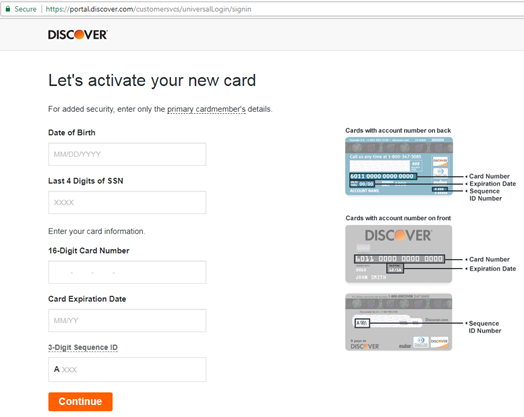
Discover

Fig. 5: Discover Web-Inject asking for additional details
The Discover.com website asks for card details, but also our Date of Birth and the last four digits of our Social Security Number!

Researchers will be diving in deep and try to reverse engineer the binary for additional information. Stay tuned for more updates.  In the meantime, if you hear of a friend complaining that their bank is asking them for too much information -- it may mean that they are infected with malware!